
Introduction
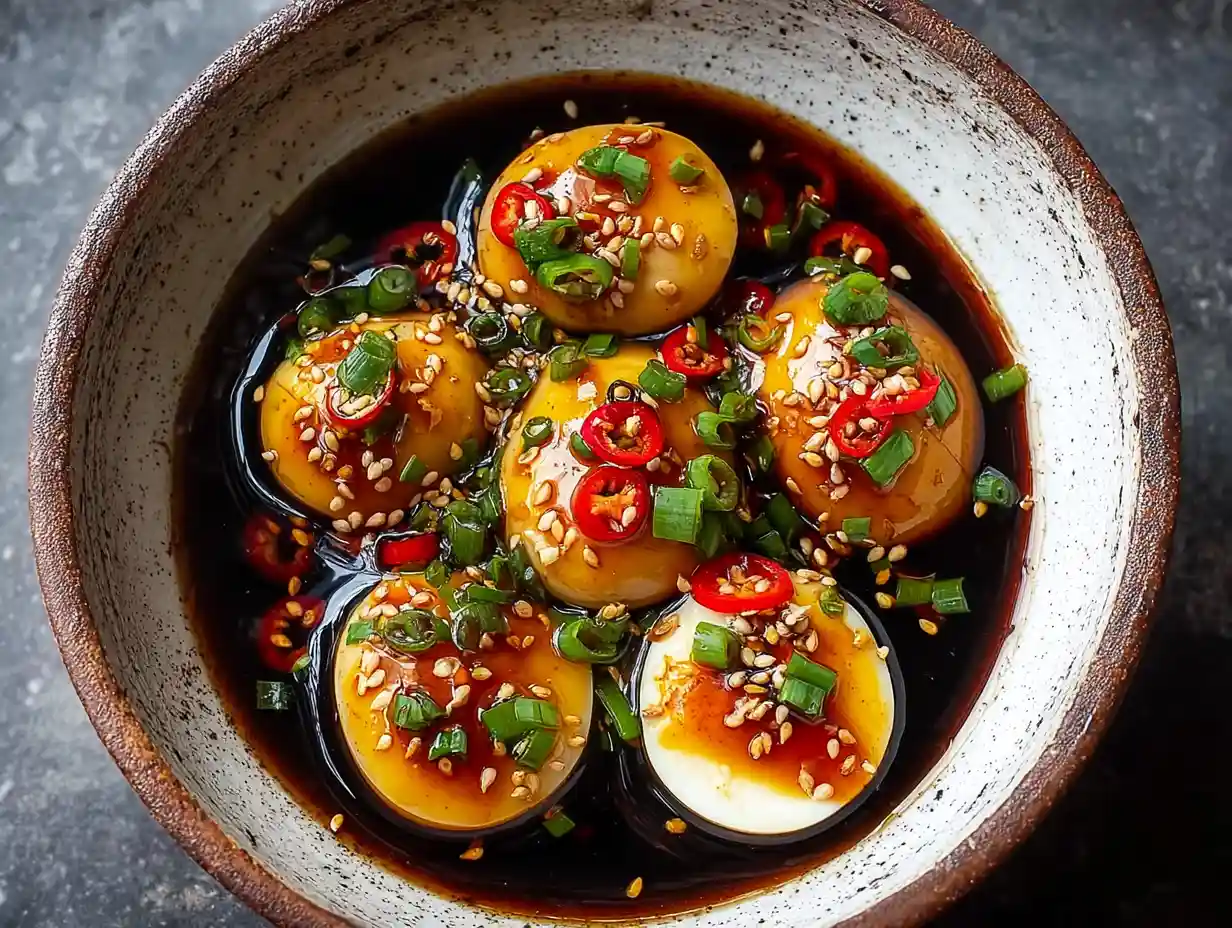
Late-night recipe chats with my friends Christina and Natalie always lead to something delicious. The other day, we were reminiscing about our favorite Korean side dishes, and I remembered a recipe that’s become a total obsession in my kitchen: Mayak Eggs, also known as Korean Marinated Eggs. They look simple, but the flavor packed into each bite is incredible.
Making these gems takes about 6 hours, most of which is hands-off marinating time, so you can whip them up for a weeknight treat or a weekend gathering. If you’re looking for an easy way to elevate your meals, you’ve come to the right place.
Table of Contents

Mayak Eggs (Korean Marinated Eggs)
Ingredients
Equipment
Method
- In a bowl or a container, add the marinade ingredients and mix to combine, ensuring all the honey is scraped from the bottom.
- Add vinegar and salt to a pot of boiling water. Reduce the heat and gently place each egg into the water. Simmer for 6 minutes (or 10 minutes for hard-boiled eggs). Prepare a large bowl of ice water.
- When the timer goes off, immediately transfer the eggs to the ice water bath. Allow the eggs to cool completely, for at least 5-10 minutes.
- Gently peel the eggs and add them to the marinade. Cover tightly and store in the refrigerator overnight, or at least 6 hours.
- To serve, place the egg over a bed of rice and garnish with green onion, seaweed flakes, and/or sesame oil to your preference. These eggs serve as an excellent garnish over a bowl of noodles as well. Enjoy!
Tried this recipe?
Let us know how it was!What are Mayak Eggs?
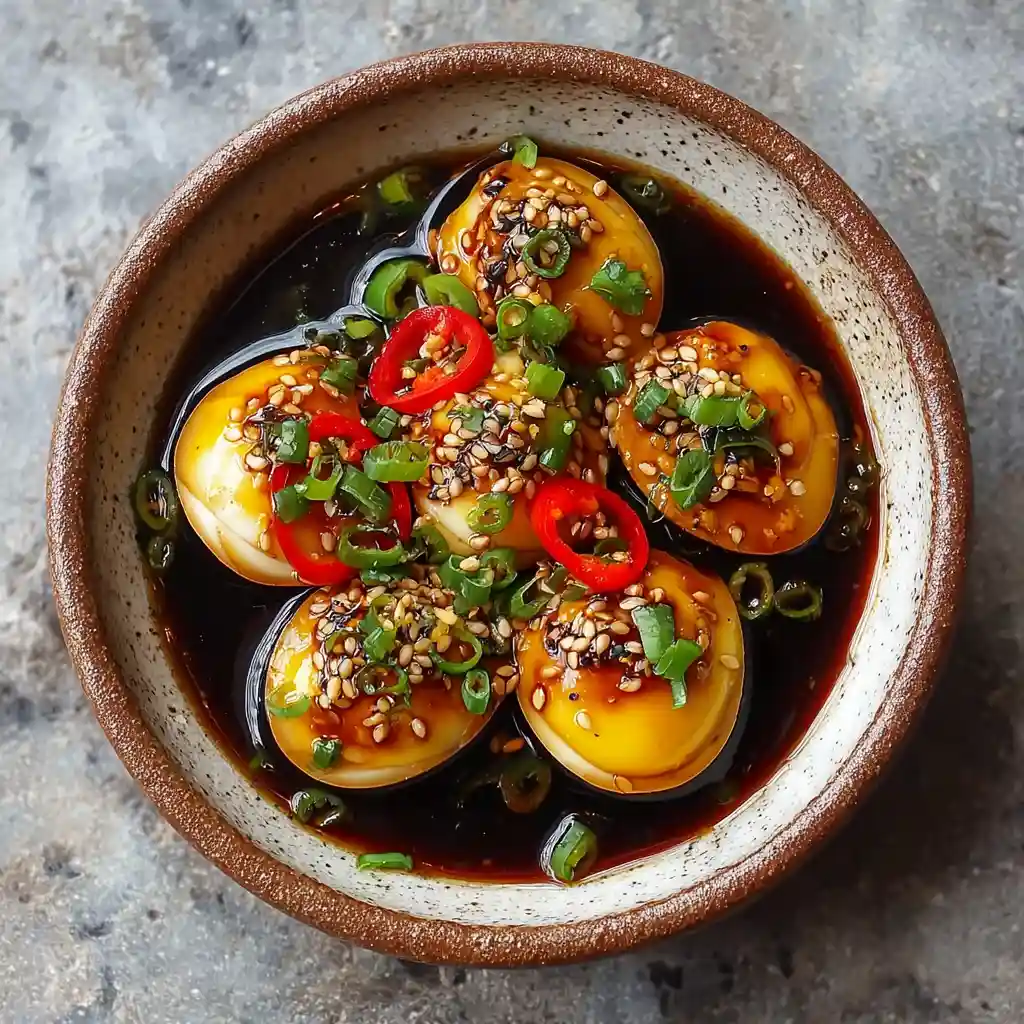
Mayak Eggs, or Korean Marinated Eggs, are a popular banchan (side dish) in Korean cuisine. They are essentially soft-boiled eggs marinated in a savory and slightly sweet soy-based sauce. The name “Mayak” translates to “drug” in Korean, a testament to how incredibly addictive these eggs are. Once you try one, you’ll understand why people can’t get enough of their rich, flavorful yolks and tender whites.
Why You’ll Love This Mayak Eggs Recipe
I’m so excited to share this recipe with you because I truly believe it’s one of the best ways to make Mayak Eggs at home. Here’s why I think you’ll love it:
- Perfectly Jammy Yolks: My method ensures you get that coveted, custardy jammy yolk every single time, which is crucial for the best texture and flavor.
- Flavorful Marinade: The balance of soy sauce, honey, and aromatics creates a deeply savory and subtly sweet marinade that infuses the eggs beautifully.
- Easy to Customize: While this recipe is fantastic as is, it’s also very forgiving and allows for easy adjustments to suit your personal taste.
Ingredients for Mayak Eggs
Here’s what you’ll need to make these addictive Korean marinated eggs:
- 6 large eggs (at room temperature)
- 1 tbsp each salt and white vinegar (for boiling the eggs)
- Green onions, seaweed flakes, and/or sesame oil (for garnish, optional)
- 1/2 cup soy sauce
- 1/2 cup water
- 1/4 cup honey (corn syrup, oligo syrup, or your choice of liquid sweetener)
- 1/4 medium onion (diced)
- 1 green onion (diced)
- 3 cloves garlic (minced)
- 2 chili pepper (diced)
- 1 tbsp toasted sesame seeds
When it comes to soy sauce, I often reach for a regular Korean or Japanese soy sauce. For chili peppers, I like to use one or two small, spicy ones like Cheongyang peppers for a kick, but you can substitute with milder options like jalapeños or even omit them if you prefer. For sweeteners, while honey provides a lovely depth, corn syrup or oligo syrup are also traditional and will give a slightly different, often clearer, glossy finish to the marinade.
If you’re in the mood for more delicious Korean cuisine, you might enjoy this Quick and Easy Korean Ground Beef Bowl Recipe.
How to Make Perfect Jammy Mayak Eggs
Achieving that perfect jammy yolk is all about timing and temperature. I find that starting with room temperature eggs helps them cook more evenly. Adding salt and vinegar to the boiling water not only seasons the eggs slightly but also helps them peel more easily later on. The key is a short, precise simmering time. For a jammy yolk, I aim for about 6 minutes. If you prefer a fully hard-boiled egg, you can go up to 10 minutes.
Once cooked, a rapid cool-down in an ice bath is essential. This stops the cooking process immediately, preventing the yolk from overcooking and developing that chalky grey ring. It also helps the egg contract slightly within its shell, making peeling much easier.
If you don’t have a stovetop, steaming is another great method. You can steam the eggs over boiling water for about 8-10 minutes for jammy yolks, adjusting for your preferred doneness.
Step-by-Step Instructions
- In a bowl or a container, add the marinade ingredients and mix to combine, ensuring all the honey is scraped from the bottom.
- Add vinegar and salt to a pot of boiling water. Reduce the heat and gently place each egg into the water. Simmer for 6 minutes (or 10 minutes for hard-boiled eggs). Prepare a large bowl of ice water.
- When the timer goes off, immediately transfer the eggs to the ice water bath. Allow the eggs to cool completely, for at least 5-10 minutes.
- Gently peel the eggs and add them to the marinade. Cover tightly and store in the refrigerator overnight, or at least 6 hours.
- To serve, place the egg over a bed of rice and garnish with green onion, seaweed flakes, and/or sesame oil to your preference. These eggs serve as an excellent garnish over a bowl of noodles as well. Enjoy!
Tips for Peeling Soft Boiled Eggs with Ease
Peeling soft-boiled eggs can sometimes be a bit tricky, but I’ve picked up a few tricks that usually work for me. The ice bath is the first and most important step; it really helps the membrane separate from the egg white.
Once they’re chilled, try cracking the egg gently all over on a hard surface. Then, start peeling from the wider end, where the air pocket usually is. If the shell is being stubborn, I sometimes find it helpful to peel the egg under a gentle stream of cool running water. The water can help get under the membrane and loosen the shell. Another method some people swear by is using a spoon. You can gently slide the spoon between the shell and the white and work your way around.
For more helpful tips and tricks, explore our main dishes category.
Marinade Variations for Mayak Eggs
The beauty of Mayak Eggs is how adaptable the marinade is. You can easily tweak it to suit your preferences. Here are a few ideas:
| Variation | Effect on Flavor | Suggested Adjustments |
|---|---|---|
| Spicier | Adds more heat and a deeper chili flavor | Increase the number of chili peppers, add a pinch of gochugaru (Korean chili flakes) |
| Sweeter | Enhances the sweetness and glaze | Increase honey or sweetener by 1-2 tablespoons |
| Less Salty | Mellows the overall saltiness of the marinade | Reduce soy sauce by 1-2 tablespoons, increase water by the same amount |
| Umami Boost | Adds a richer, more complex savory depth | Add a splash of fish sauce or a small piece of dried kelp to the marinade while chilling |
Serving Suggestions for Mayak Eggs
While Mayak Eggs are classically served over a bed of warm rice, their versatility extends far beyond that. I love adding them to a hearty bowl of ramen or udon noodles, where the jammy yolk can enrich the broth. They’re also fantastic sliced in half and placed on top of a vibrant Korean bibimbap.
For a quick and satisfying meal, I sometimes chop them up and mix them into a creamy mayonnaise-based sauce for a unique sandwich filling, almost like a deviled egg but with a Korean twist. They can also be a delightful addition to a simple green salad, adding a burst of flavor and protein. If you’re exploring other Korean dishes, they pair wonderfully with savory pancakes (pajeon) or spicy stir-fried rice cakes (tteokbokki).
How to Store Mayak Eggs
Once the eggs have marinated for at least 6 hours, they are ready to be stored. I always keep them in the marinade in a tightly sealed container in the refrigerator. This marinade is essential for keeping the eggs flavorful and moist. They will stay good for about 4-5 days when stored this way. Make sure to check the eggs periodically to ensure they remain submerged in the marinade.
Food Safety and Mayak Eggs
When it comes to marinating eggs, especially soft-boiled ones, food safety is paramount. The marinade itself contains soy sauce and aromatics, which have some preservative qualities, but it’s crucial to handle raw ingredients with care. Always use fresh eggs and ensure your hands and utensils are clean when preparing the marinade and handling the eggs.
Since the eggs are marinated in the refrigerator, this significantly slows down bacterial growth. However, I never recommend keeping marinated eggs for longer than 4-5 days. After this time, the quality can degrade, and the risk of spoilage increases.
To tell if your eggs have gone bad, look for any off-putting smells, a slimy texture on the egg white, or unusual discoloration. When in doubt, it’s always best to discard them. You can find further resources and tips on safely handling and storing food on FoodSafety.gov.
Troubleshooting Common Issues with Mayak Eggs
Sometimes, even with the best intentions, things don’t turn out exactly as planned. Here are a few common issues and how to fix them:
- Eggs are too hard-boiled: This usually comes down to timing. Next time, try reducing the simmering time by a minute or two. If they’re already cooked and too hard, there’s not much you can do to soften them, but they’ll still be delicious.
- Eggs are too soft/runny: If your yolks are too runny for your liking, increase the simmering time by 1-2 minutes on your next batch. For eggs that are too runny to handle, carefully scoop them out and let them drain on a paper towel for a moment before serving.
- Marinade is too bland: You can easily fix this by letting the eggs marinate longer, as they will continue to absorb flavor. If you want to serve them sooner, you can whisk in a bit more soy sauce, a pinch of sugar, or some minced garlic and chili.
- Marinade is too salty: If the marinade is overwhelmingly salty, you can add a little more water or a touch more sweetener to balance it out. If the eggs have already absorbed a lot of salty marinade, serving them with plain rice can help to temper the saltiness.
Mayak Eggs Recipe for High Altitude Cooking
Cooking at higher altitudes can change the way eggs cook because water boils at a lower temperature. If you live significantly above sea level, you might need to adjust your cooking times. For jammy yolks, I would recommend adding an extra minute or two to the simmering time. For hard-boiled eggs, you may need to increase the cooking time by 2-3 minutes. It’s always a good idea to do a test egg first to nail down the perfect timing for your specific altitude.
Can Mayak Eggs be Made Vegan?
While Mayak Eggs are traditionally made with chicken eggs, the concept can certainly be adapted for a vegan version. The key is to find a suitable replacement for the eggs that will absorb the delicious marinade.
| Ingredient | Traditional Ingredient | Vegan Substitution | Notes |
|---|---|---|---|
| Eggs | Large Eggs | Firm or Extra-Firm Tofu (pressed and cut into egg shapes) | Marinate for at least 6 hours, or preferably overnight, for best flavor. |
| King Oyster Mushrooms (scored and cut to resemble whites and yolks) | Marinate for at least 6 hours. The texture will be chewier. | ||
| Honey | Honey | Maple Syrup, Agave Nectar, or other liquid sweetener | Adjust sweetness to your preference. |
The marinated tofu or mushrooms will soak up the savory marinade beautifully, offering a satisfying and flavorful plant-based alternative. If you like vegan alternatives, you should check out other recipes in our bakes & sweets category!
Frequently Asked Questions
Can I use different types of sweeteners (maple syrup, agave)? What are the flavor differences?
Yes, absolutely! While honey is my personal favorite for its rich flavor, maple syrup and agave nectar are excellent substitutes. Maple syrup will impart a subtle maple note, which can be lovely, especially if you like slightly sweeter, complex flavors. Agave nectar is more neutral in flavor, similar to corn syrup, and will give the marinade a nice sheen without adding a distinct taste of its own. The amount you use might vary slightly depending on the sweetness of your chosen sweetener.
Is it safe to reuse the marinade? For how long? What are the risks?
I strongly advise against reusing the marinade that the eggs have been sitting in. Once the raw egg whites have been submerged in the marinade for an extended period, especially if they are not perfectly fresh or if refrigeration temperatures fluctuate, there’s an increased risk of bacterial growth. The marinade can become a breeding ground for bacteria, which could lead to foodborne illness. It’s always safest to discard the used marinade and make a fresh batch if you plan to marinate more eggs.
What are some less common but delicious ways to serve Mayak Eggs (e.g., in sandwiches, salads)?
Beyond rice and noodles, Mayak Eggs are surprisingly versatile. I love slicing them thinly and adding them to avocado toast for an extra pop of flavor and protein. They also make a fantastic addition to grain bowls, adding a savory, jammy element that complements roasted vegetables and grains. Another idea is to chop them up and mix them with a bit of Kewpie mayonnaise and a dash of sriracha for a unique take on a “deviled egg” filling for lettuce wraps or even as a topping for crackers.
What are some other Korean dishes that pair well with Mayak Eggs?
Mayak Eggs are a perfect accompaniment to so many Korean dishes. They are a classic banchan, meaning they’re meant to be enjoyed alongside a main meal. They go wonderfully with savory dishes like kimchi fried rice (kimchi bokkeumbap) or spicy pork stir-fry (jeyuk bokkeum). If you’re having a Korean BBQ spread, they can offer a cooling, savory contrast to the rich, grilled meats. They also pair beautifully with simple steamed rice and a side of kimchi, making for a quick and satisfying meal.
Conclusion
There you have it, my foolproof method for making Mayak Eggs! These little flavor bombs are incredibly satisfying and surprisingly easy to whip up. I hope you love the jammy yolks and the addictive savory-sweet marinade as much as I do. Give them a try and let me know what you think in the comments below! Have you made them before? What are your favorite ways to serve them? I can’t wait to hear about your delicious creations!