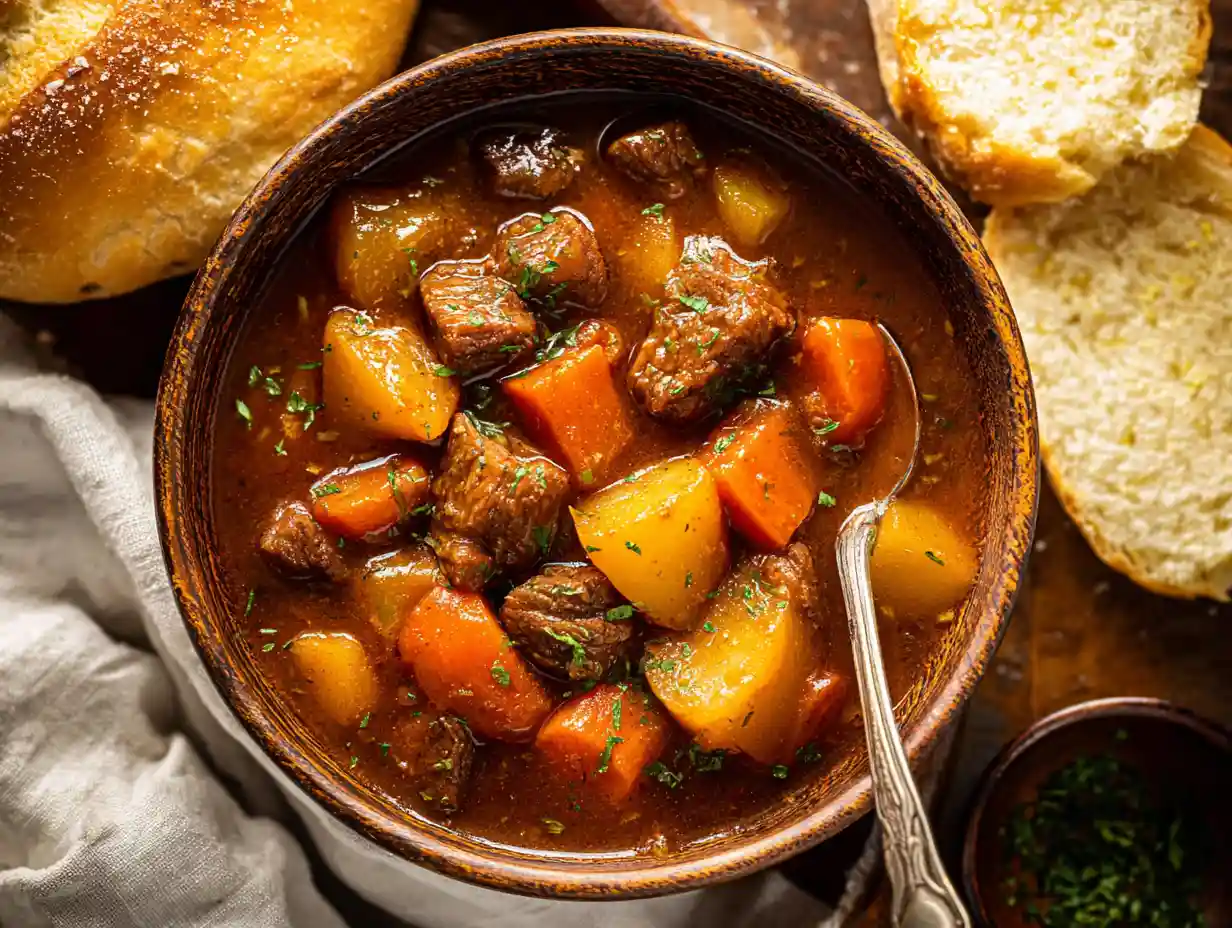

There’s something so comforting about the smell of a hearty beef stew simmering on the stove, isn’t there? It reminds me of chilly evenings and cozy family dinners. That’s why I’m so excited to share my recipe for Old Fashioned Beef Stew with you.
It’s a classic, hearty dish that’s perfect for a cozy night in. While it requires a bit of time, about 2 hours and 15 minutes from start to finish, the end result is well worth the effort!
Table of Contents
What is Old Fashioned Beef Stew?

Old Fashioned Beef Stew is a dish that evokes a sense of tradition and nostalgia. What makes it “old fashioned” is its simplicity, reliance on classic ingredients, and slow cooking method, all of which have been passed down through generations. It’s a celebration of rustic flavors and simple preparation.
Why You’ll Love This Old Fashioned Beef Stew
You’re going to adore this Old Fashioned Beef Stew, and here’s why:
- The beef is incredibly tender; it practically melts in your mouth after simmering to perfection.
- The broth is rich and flavorful, a testament to the slow cooking process.
- It’s packed with nutrients from the beef and vegetables, making it a complete and wholesome meal.
- Cleanup is a breeze, especially if you use a Dutch oven.
A Brief History of Beef Stew
Beef stew has a rich history, with its origins tracing back to ancient times when cooks would simmer tough cuts of meat to make them more palatable. This resourceful cooking method has been adopted by cultures around the world.
Over time, beef stew has evolved, with different cultures adding their own unique twists and ingredients, but the essence of a hearty, slow-cooked meat and vegetable dish remains the same.
Regional Variations of Beef Stew
Beef stew takes on different forms across the globe, reflecting local ingredients and culinary traditions. Think of Irish stew, typically made with lamb or mutton, potatoes, and onions; or Hungarian goulash, a vibrant stew featuring beef, paprika, and other spices. Though the core concept remains similar, each regional variation offers a unique and delicious experience.
Ingredients for Old Fashioned Beef Stew
Here’s what you’ll need to make this comforting dish:
- 1/4 cup all-purpose flour
- 1/4 teaspoon freshly ground pepper
- 1 pound beef stewing meat, trimmed and cut into inch cubes
- 5 teaspoons vegetable oil
- 3 tablespoons apple cider vinegar
- 1 cup beef broth
- 3 1/2 cups beef broth, homemade or low-sodium canned
- 2 bay leaves
- 1 medium onion, peeled and chopped
- 5 medium carrots, peeled and cut into 1/4-inch rounds
- 2 large baking potatoes, peeled and cut into 3/4-inch cubes
- 2 teaspoons salt
Ingredient Notes and Substitutions
Let’s break down each ingredient and explore some potential substitutions:
| Ingredient | Purpose | Substitution Options |
|---|---|---|
| All-Purpose Flour | Coats the beef, helping it brown and thickening the stew. | Gluten-free flour blend, cornstarch (for thickening later on). |
| Freshly Ground Pepper | Adds a touch of spice and enhances the overall flavor. | Black pepper, white pepper, or a pinch of red pepper flakes. |
| Beef Stewing Meat | Provides the rich, meaty base of the stew. | Chuck roast, brisket, or short ribs. |
| Vegetable Oil | Used for browning the beef. | Olive oil, canola oil, or any other neutral cooking oil. |
| Apple Cider Vinegar | Adds a touch of acidity and depth to the broth. | Balsamic vinegar, or lemon juice. |
| Beef Broth | Forms the liquid base of the stew. | Chicken broth, vegetable broth, or water with bouillon cubes. |
| Bay Leaves | Infuses the stew with a subtle, aromatic flavor. | Dried thyme, rosemary, or oregano. |
| Onion | Adds sweetness and savory flavor to the stew. | Shallots, leeks, or yellow onions. |
| Carrots | Adds sweetness, color, and nutrients to the stew. | Parsnips, turnips, or sweet potatoes. |
| Baking Potatoes | Adds heartiness and thickens the stew. | Yukon gold potatoes, red potatoes, or sweet potatoes. |
| Salt | Enhances the overall flavor of the stew. | Sea salt, kosher salt, or soy sauce (use sparingly). |
Choosing the Right Beef for Your Old Fashioned Beef Stew
The type of beef you choose can significantly impact the final result of your stew.
- Chuck: This is my go-to choice for beef stew. It has a good amount of marbling (fat within the muscle), which renders down during the long cooking time, resulting in tender, flavorful meat. Raw chuck roast will appear well-marbled and may have some larger pieces of fat on the exterior.
- Brisket: Brisket is another great option, especially if you like a richer flavor. It’s a tougher cut, but the long, slow cooking process breaks down the connective tissue, making it incredibly tender. Raw brisket is a large, flat cut with a thick layer of fat on one side.
- Short Ribs: If you’re looking for an intensely flavorful stew, short ribs are the way to go. They have a high fat content and plenty of bone, which adds richness to the broth. Raw short ribs are easily identifiable by their meaty appearance and the visible bones running through them.
When sourcing beef, I always recommend looking for high-quality, well-marbled cuts. A stew made with beef provides essential nutrients. For example, a serving size of 1 1/2 cups of beef stew contains 280 calories.
If you’re looking for other hearty dishes, explore our collection of great main dishes.
Vegetable Selection & Preparation
The vegetables in beef stew not only add flavor and nutrients but also contribute to the stew’s overall texture. Root vegetables like carrots and potatoes are ideal because they hold their shape well during long cooking times.
When preparing the vegetables, I like to cut them into uniform sizes to ensure even cooking. For carrots, I prefer 1/4-inch rounds. For potatoes, I go with 3/4-inch cubes. This consistency guarantees that everything cooks at the same rate.
Essential Equipment
To make the best Old Fashioned Beef Stew, you’ll need a few key pieces of equipment.
- Dutch Oven: A Dutch oven is my top choice for making beef stew. Its heavy bottom and thick walls distribute heat evenly, preventing hot spots and ensuring that the beef cooks evenly.
- Large Stockpot: If you don’t have a Dutch oven, a large stockpot will work just fine. Just be sure to keep a close eye on the stew to prevent it from scorching.
- Sharp Knife: A good quality knife is essential for chopping the vegetables and trimming the beef.
- Wooden Spoon: A sturdy wooden spoon is perfect for stirring the stew and scraping up any browned bits from the bottom of the pot.
Step-by-Step Instructions for Perfect Old Fashioned Beef Stew
Now, let’s get cooking!
- Combine the flour and pepper in a bowl.
- Add the beef and toss to coat well.
- Heat 3 teaspoons of the oil in a large pot.
- Add the beef a few pieces at a time; do not overcrowd.
- Cook, turning the pieces until beef is browned on all sides, about 5 minutes per batch; add more oil as needed between batches.
- Remove the beef from the pot and add the apple cider vinegar and 1 cup beef broth.
- Cook over medium-high heat, scraping the pan with a wooden spoon to loosen any browned bits.
- Add the beef, the remaining 3 1/2 cups beef broth and bay leaves. Bring to a boil, then reduce to a slow simmer.
- Cover and cook, skimming broth from time to time, until the beef is tender, about 1 1/2 hours.
- Add the onions and carrots and simmer, covered, for 10 minutes.
- Add the potatoes and simmer until vegetables are tender, about 30 minutes more.
- Add broth or water if the stew is dry. Season with salt and pepper to taste. Ladle among 4 bowls and serve.
Flavor Development Tips
Building flavor in beef stew is all about layering ingredients and using the right techniques.
- Sear the Beef Properly: Searing the beef creates a rich, browned crust that adds depth of flavor to the stew.
- Use High-Quality Broth: A good quality broth or stock is essential for a flavorful stew.
- Layer Flavors: Add herbs and spices at different stages of cooking to build complexity.
If you enjoy a touch of acidity, consider using The Ultimate Festive Candied Cranberries Recipe for a unique twist.
Thickening Methods for Beef Stew
Besides flour, here are some other ways to thicken your stew:
| Thickening Method | Pros | Cons |
|---|---|---|
| Roux | Adds a nutty flavor and creates a smooth, velvety texture. | Requires careful whisking to avoid lumps; adds fat. |
| Cornstarch | Gluten-free and provides a clear, glossy finish. | Can become gloppy if overused; doesn’t add much flavor. |
| Potato Starch | Gluten-free and has a neutral flavor. | Can become gummy if overcooked; may not hold up well to long simmering. |
| Pureed Vegetables | Adds nutrients and flavor while thickening the stew naturally. | May alter the overall flavor profile; requires an extra step of pureeing. |
Make-Ahead Instructions
To save time, you can prep the stew up to 24 hours in advance. I recommend browning the beef and chopping the vegetables the day before. Store them separately in the refrigerator, and then combine them in the pot the next day to continue with the recipe.
Troubleshooting Common Beef Stew Problems
- Stew is Too Watery: Simmer the stew uncovered for a longer period to allow the liquid to evaporate.
- Beef is Tough: Ensure the beef is cooked long enough at a low simmer to break down the connective tissue.
- Stew is Bland: Add more salt, pepper, or other seasonings to taste. Consider using a higher quality broth.
- Vegetables are Mushy: Cut the vegetables into larger pieces or add them later in the cooking process.
Serving Suggestions: What to Serve with Old Fashioned Beef Stew
Beef stew is a complete meal on its own, but it pairs wonderfully with:
- Crusty bread for soaking up the delicious broth.
- A simple side salad with a light vinaigrette to add freshness.
Storing and Reheating Leftover Old Fashioned Beef Stew
Store leftover beef stew in an airtight container in the refrigerator for up to 3-4 days. To reheat, simply warm it up in a pot on the stove over medium heat, or microwave it in a microwave-safe dish until heated through.
Health Benefits of Old Fashioned Beef Stew
Beef stew offers a range of health benefits. The vegetables provide essential vitamins and minerals, while the beef is a great source of protein and iron. According to the University of Rochester Medical Center, one cup of canned beef stew provides 11.3g of protein.
FAQs about Old Fashioned Beef Stew
How can I make my beef stew more flavorful?
Sear the beef properly, use high-quality broth, and layer flavors with herbs and spices.
What kind is the best beef for stew?
Chuck roast is my go-to choice due to its marbling and flavor.
What vegetables go well in beef stew?
Root vegetables like carrots, potatoes, and turnips are excellent choices.
What sides do I pair with this classic beef stew recipe?
Crusty bread and a simple side salad are perfect accompaniments.
Are there any toppings to add to this hearty dish?
Fresh parsley, a dollop of sour cream, or a sprinkle of cheese can add extra flavor.
Can I adapt this recipe for dietary restrictions (gluten-free, dairy-free)?
Yes, use gluten-free flour or cornstarch for thickening, and ensure your broth is dairy-free.
Conclusion
Old Fashioned Beef Stew is more than just a recipe; it’s a comforting classic that brings people together. The tender beef, rich broth, and hearty vegetables create a satisfying and wholesome meal that’s perfect for any occasion. So, gather your ingredients, put on your apron, and get ready to enjoy a truly unforgettable dish!
I’d love to hear from you! If you try this recipe, please leave a comment below and let me know how it turns out. If you have any questions, don’t hesitate to ask. Happy cooking!
Craving more hearty favorites? Don’t forget to follow us on Pinterest, we share the best comforting meals, family dishes, and seasonal recipes every week.

Remarkable Old Fashioned Beef Stew: A Simple Recipe
Ingredients
Equipment
Method
- Combine the flour and pepper in a bowl.
- Add the beef and toss to coat well.
- Heat 3 teaspoons of the oil in a large pot.
- Add the beef a few pieces at a time; do not overcrowd.
- Cook, turning the pieces until beef is browned on all sides, about 5 minutes per batch; add more oil as needed between batches.
- Remove the beef from the pot and add the apple cider vinegar and 1 cup beef broth.
- Cook over medium-high heat, scraping the pan with a wooden spoon to loosen any browned bits.
- Add the beef, the remaining 3 1/2 cups beef broth and bay leaves. Bring to a boil, then reduce to a slow simmer.
- Cover and cook, skimming broth from time to time, until the beef is tender, about 1 1/2 hours.
- Add the onions and carrots and simmer, covered, for 10 minutes.
- Add the potatoes and simmer until vegetables are tender, about 30 minutes more.
- Add broth or water if the stew is dry. Season with salt and pepper to taste. Ladle among 4 bowls and serve.