
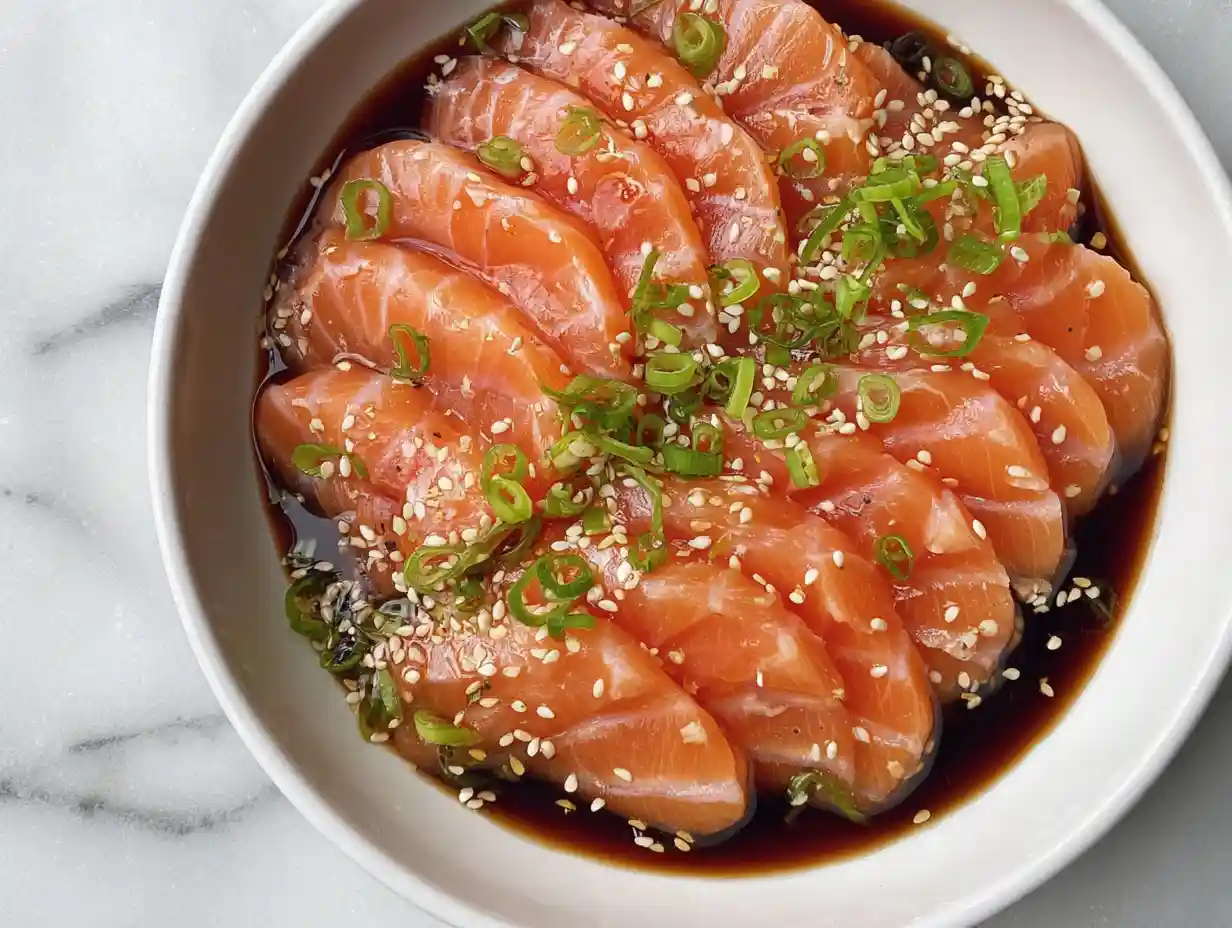

I’ll never forget the first time I tried making salmon sashimi at home. I was intimidated, convinced it was something best left to the pros. But with a little research and a lot of courage, I discovered it’s surprisingly simple and incredibly rewarding! Salmon Sashimi is an elegant, healthy dish that you can easily whip up in about 15 minutes.
Table of Contents
What is Salmon Sashimi?
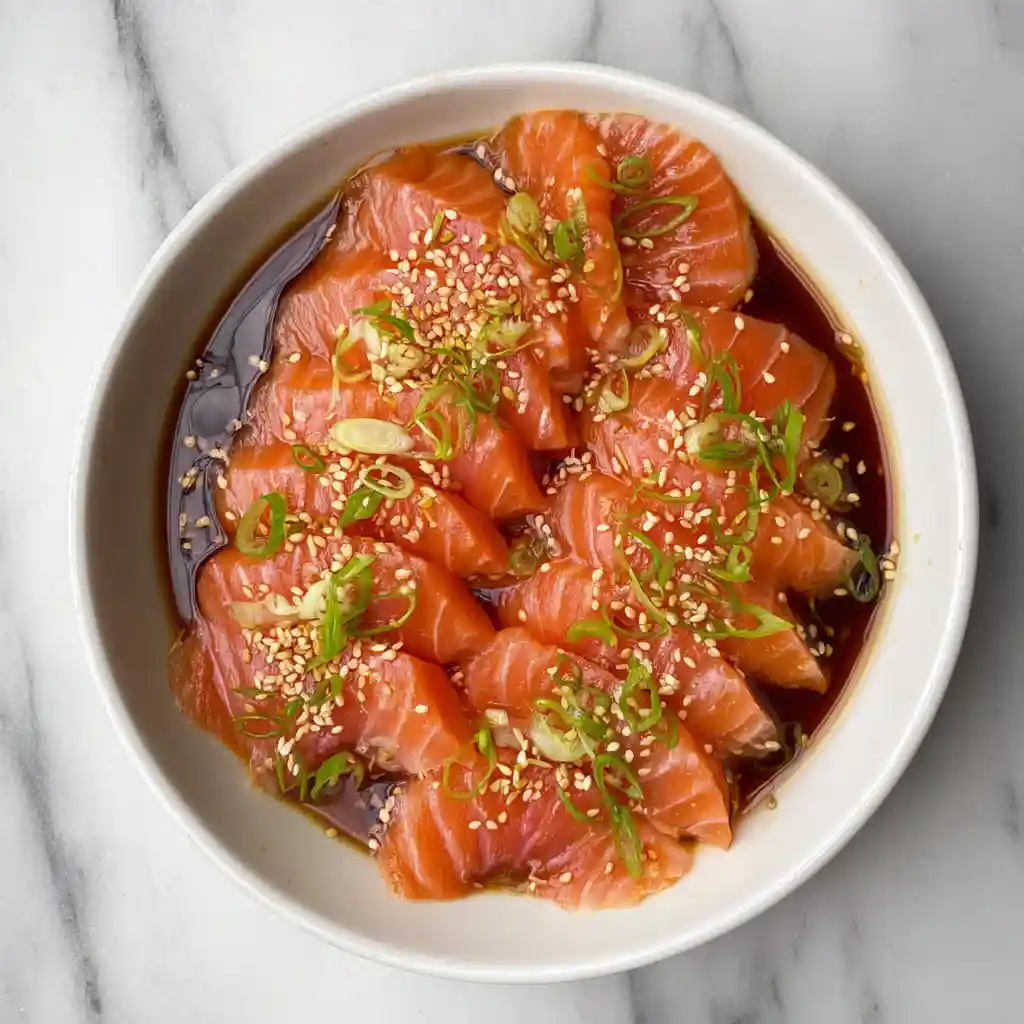
Salmon Sashimi is a Japanese delicacy that features thinly sliced, raw salmon. It’s all about simplicity, highlighting the fish’s natural flavor and texture. The key is using high-quality, fresh ingredients. Salmon Sashimi holds a special place in Japanese cuisine, celebrated for its delicate taste and beautiful presentation.
Why Make Salmon Sashimi at Home?
- It’s way more cost-effective than ordering it at a restaurant.
- I love that I can customize my dipping sauces to my exact liking.
- Making Salmon Sashimi at home is a surefire way to impress my guests with a sophisticated dish.
Ingredients for Perfect Salmon Sashimi
Here’s what you’ll need to create this delicious dish:
- 5-6 oz salmon (sushi grade only***)
- 1 tbsp soy sauce
- 1 tbsp citrus ponzu sauce
- ¼ tsp pressed or minced garlic (optional for garlic ponzu sauce)
- 3 tbsp soy sauce
- ¼ tsp wasabi (adjust to desired level of heat)
- ¼ tsp fresh lemon juice
- 5-6 slices lemon
- ½ tsp wasabi
- 1 tbsp pickled ginger (thinly sliced)
***It’s crucial to use sushi-grade salmon to ensure safety and quality.
Finding the Best Salmon: A Deep Dive
When it comes to salmon, you’ll often see “farmed” and “wild” options. Farmed salmon tends to be more readily available and often more affordable. Wild salmon has a richer flavor. I always look for previously frozen salmon from a reputable grocery store or online retailer. This helps minimize the risk of parasites. When selecting your salmon, make sure it has a fresh, clean smell, a vibrant color, and a firm texture. Avoid anything that smells overly fishy or looks dull.
Because this is a raw dish, it is best to prepare it safely by learning the best food safety practices for preparing raw meals.
Essential Equipment
To make perfect salmon sashimi, you’ll need a few essential tools:
- A sharp knife is crucial for achieving clean, even slices. A dull knife can tear the fish and ruin the texture.
- A cutting board provides a stable surface for slicing.
- Small bowls are great for the dipping sauces.
How to Make Salmon Sashimi: Step-by-Step Instructions
Here’s how I create my salmon sashimi:
- Slice salmon fish into thin slices (sashimi style, about ¼ inch thick or your preference). Slices should be rectangular shape.
- Mix soy sauce and citrus yuzu ponzu sauce for a delicious dipping sauce. They can also be used as separate dipping sauces. If you would like to make garlic ponzu sauce, you can add a pinch of pressed or finely minced garlic to your ponzu. This garlic ponzu sauce was made popular by the famous Japanese restaurant Nobu.
- Mix soy sauce, wasabi and lemon juice for a delicious dipping sauce. The lemon juice is not traditional but it adds a nice tart flavor.
- Wasabi and pickled ginger may also be served as a side.
Be sure to check out my slicing guide for visual tips!
Dipping Sauce Variations
While the classic soy sauce is always a winner, I love experimenting with different dipping sauces. Here are a few ideas:
- Spicy Mayo: Mix mayonnaise with sriracha and a touch of sesame oil for a creamy, spicy kick.
- Ginger-Scallion Sauce: Combine grated ginger, finely chopped scallions, soy sauce, and a drizzle of sesame oil.
While this dish is elegant, you might also enjoy making dessert strawberry shortcake sushi rolls!
Serving and Plating Salmon Sashimi
Presentation is key! I like to arrange my salmon sashimi slices artfully on a plate, alongside traditional accompaniments like seaweed salad and daikon radish. To elevate it for guests, I sometimes add edible flowers or microgreens for a pop of color.
Food Safety: A Comprehensive Guide
It’s essential to understand the food safety aspects of consuming raw fish. Freezing helps reduce the risk of parasites, and the FDA has guidelines regarding the freezing of fish intended for raw consumption. It’s so important to buy your salmon from reputable sources that handle their fish properly. Always practice proper handling techniques, keeping the salmon refrigerated until you’re ready to slice and serve.
Following the four main steps to keep food safe, which include cleaning, separating, cooking, and chilling, is critical.
FAQs about Salmon Sashimi
What does “sushi-grade” mean?
“Sushi-grade” indicates that the salmon has been handled in a way that minimizes the risk of parasites and bacteria, making it safe for raw consumption.
Can I use frozen salmon?
Yes, previously frozen salmon is generally acceptable, as freezing helps kill potential parasites.
How long does Salmon Sashimi last?
Salmon Sashimi is best consumed immediately. However, it can be safely stored in the refrigerator for up to 24 hours.
Can I make this in advance?
I recommend slicing and serving the salmon sashimi immediately for the best quality. You can prepare the dipping sauces in advance, but the fish is best when fresh.
Conclusion
Making Salmon Sashimi at home is easier than you think! It’s a delicious, healthy, and impressive dish that I know you’ll enjoy. I encourage you to try it out and let me know how it goes. Leave a comment below with any questions or share your results. I can’t wait to hear from you!
Craving fresh, simple Japanese sashimi meals? Follow us on Pinterest for tips, boards, and pairings!

Incredible Salmon Sashimi: The Ultimate Guide
Ingredients
Equipment
Method
- Slice salmon fish into thin slices (sashimi style, about ¼ inch thick or your preference). Slices should be rectangular shape.
- Mix soy sauce and citrus yuzu ponzu sauce for a delicious dipping sauce. They can also be used as separate dipping sauces. If you would like to make garlic ponzu sauce, you can add a pinch of pressed or finely minced garlic to your ponzu. This garlic ponzu sauce was made popular by the famous Japanese restaurant Nobu.
- Mix soy sauce, wasabi and lemon juice for a delicious dipping sauce. The lemon juice is not traditional but it adds a nice tart flavor.
- Wasabi and pickled ginger may also be served as a side.