
Introduction
There’s something so incredibly comforting about a hearty plate of corned beef and cabbage, isn’t there? It always feels like a special occasion, but my friends and I know it doesn’t have to be complicated. This easy slow cooker corned beef and cabbage recipe is my go-to for a reason. It’s practically a set-it-and-forget-it kind of meal that delivers unbelievably tender meat and perfectly cooked vegetables with minimal effort. Forget the fuss, this is pure, delicious simplicity.
Table of Contents

Easy Slow Cooker Corned Beef and Cabbage
Ingredients
Equipment
Method
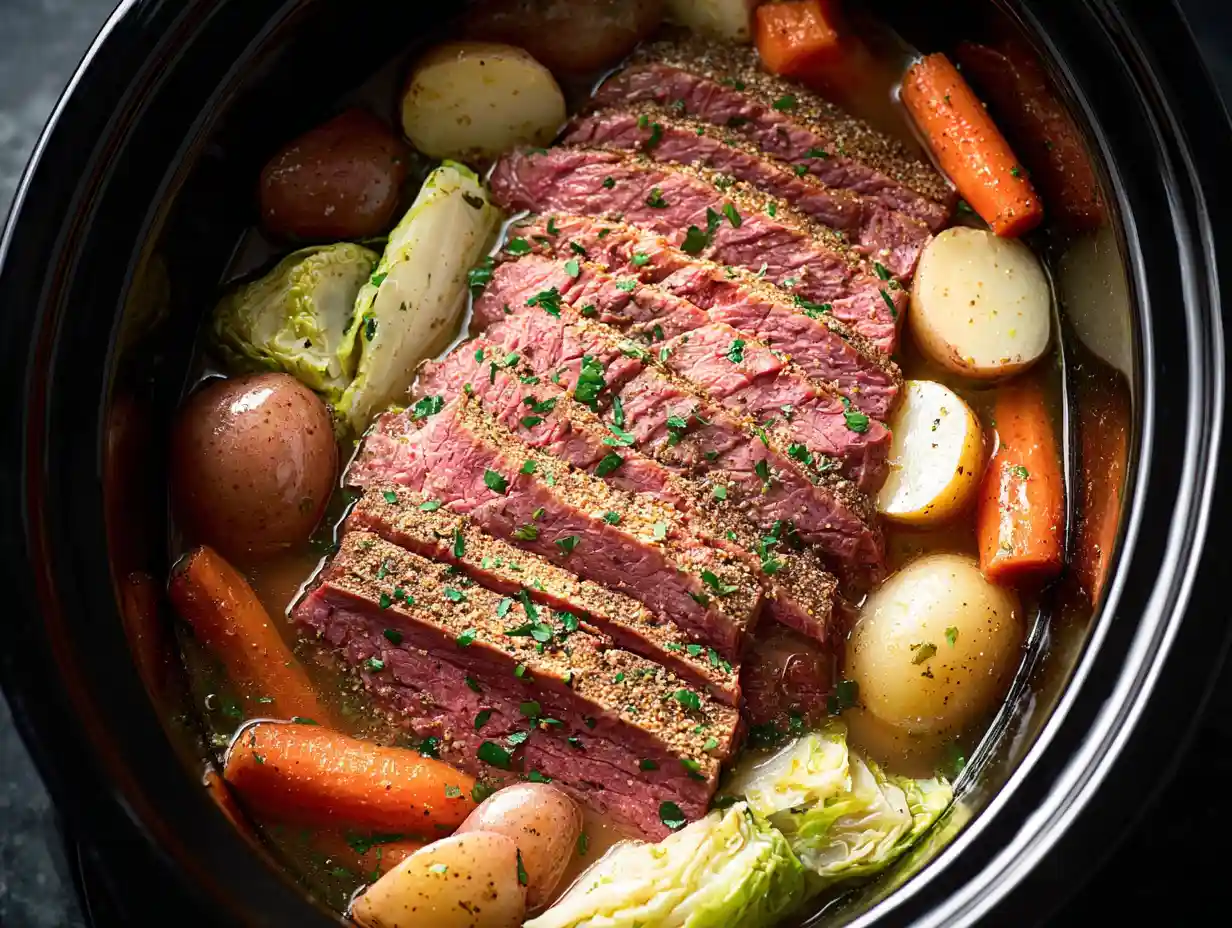
- Place the potatoes, onions, carrots, celery, and garlic cloves in the bottom of a 6-quart slow cooker. I love doing this because these hardier vegetables start softening early on, absorbing all those wonderful beefy flavors. This also creates a nice bed for the corned beef.
- Add the corned beef to the slow cooker on top of the vegetables with the fat side up. I also add any juices from the package to the slow cooker as well for extra flavor. This is where all that concentrated goodness lives. Add the packet of pickling spices that came with the corned beef. If you like lots of flavor, add an additional 2 tablespoons of an all-purpose pickling spice.
- Add enough beef broth to just barely reach the top of the corned beef. I usually use about 3 cups but it will vary based on the size of your slow cooker and the size of your corned beef. The goal is to have enough liquid to tenderize the meat without completely submerging it. Cover and cook on low for about 9 hours. This long, slow cooking time is key to achieving that incredibly tender texture.
- About an hour before serving, add the cut cabbage into 1 inch wedges and add it to the broth around the brisket. Cover and cook for about an hour or until the cabbage has reached your desired tenderness. I add the cabbage later because I prefer it tender but not mushy. Waxy potatoes are great here as they hold their shape well.
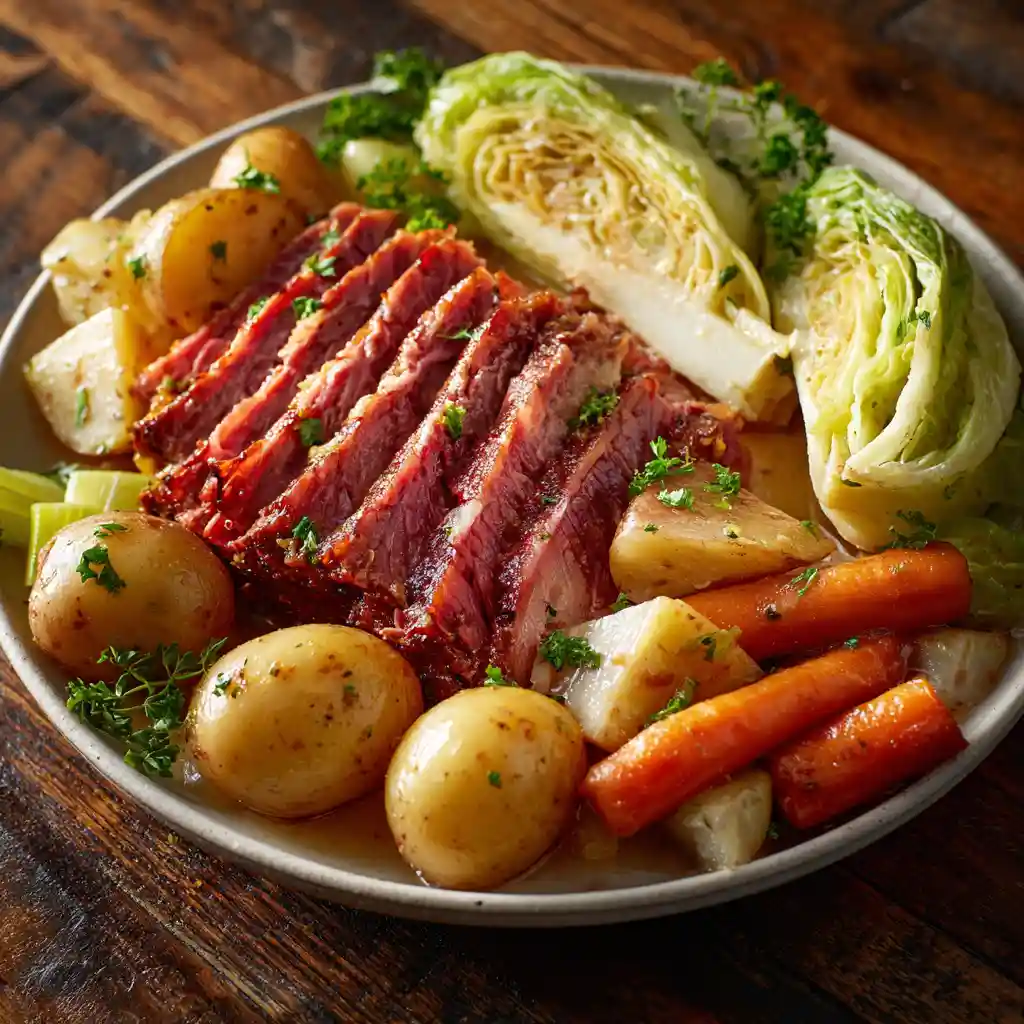
- Once done cooking, remove the brisket from the slow cooker and remove the fat layer, if desired. To check if the beef is perfectly tender, it should easily shred or slice with a fork. You can also use a meat thermometer; the internal temperature should be around 200°F for optimal tenderness. Shred or slice the beef against the grain and serve with spicy mustard or a horseradish sauce along with the cabbage and other vegetables.
Nutrition
Tried this recipe?
Let us know how it was!Why You’ll Love This Easy Slow Cooker Corned Beef and Cabbage Recipe
What makes this recipe a winner in my book? For starters, it’s incredibly straightforward. You just toss everything into the slow cooker and let it work its magic, which means less time fussing in the kitchen and more time enjoying yourself.
The slow cooker is brilliant at breaking down the tough fibers in corned beef, resulting in incredibly tender, melt-in-your-mouth meat. Plus, it infuses all the vegetables with that savory corned beef flavor. It’s also a fantastic meal prep option, making it perfect for busy weeknights or planning ahead for a holiday gathering.
Understanding Your Corned Beef: Flat Cut vs. Point Cut & Fat Management
When you’re picking out your corned beef, you’ll usually see two main cuts: flat cut and point cut. The flat cut, also known as the “first cut,” is leaner and tends to hold its shape better when cooked, making it ideal for slicing. The point cut, or “second cut,” has more marbling and fat, which can lead to a more tender and moist result, but it can also be a bit messier to handle and may shred more easily. For this slow cooker recipe, I often reach for the flat cut because I like to slice my corned beef neatly.
Now, about that fat cap. I usually leave it on during cooking because it adds incredible flavor and moisture to the corned beef as it renders down. You can score the fat cap in a diamond pattern before cooking, which helps the seasonings penetrate. Then, after it’s cooked, you have the option to easily remove the solidified fat layer before slicing, or just scrape off the excess. It’s really a matter of personal preference and how lean you like your finished dish.
The Great Rinse Debate: Should You Rinse Corned Beef Before Cooking?
This is a question I get asked a lot. Some people swear by rinsing the corned beef under cold water before cooking, believing it removes excess salt and the brining spices, resulting in a less salty final product. I understand the reasoning, and if you’re sensitive to salt or prefer a milder flavor, giving it a quick rinse can help. However, I often skip the rinse because I find the pickling spice brine contributes wonderfully to the overall flavor.
If you do decide to rinse your corned beef, I recommend using a bit more beef broth than the recipe calls for, maybe an extra cup or two. This ensures you still have enough liquid to keep the meat moist throughout the long cooking process without it becoming overly salty. Taste your liquid before serving the vegetables if you’re unsure.
Elevating Your Slow Cooker Corned Beef and Cabbage with Spices
While the spice packet that comes with the corned beef is a good start, I love to amp up the flavor even more! You can easily create your own custom pickling spice blend if you enjoy a more complex taste. Think about adding ingredients like mustard seeds, coriander seeds, black peppercorns, dill seeds, and a pinch of red pepper flakes.
Juniper berries and bay leaves are also fantastic additions that lend a beautiful, aromatic depth to the cooking liquid. Don’t be afraid to experiment; these little touches make a big difference.
Best Liquids for Your Slow Cooker Corned Beef and Cabbage
The liquid you choose to cook your corned beef in can really impact the final flavor. While water works in a pinch, I always opt for beef broth. It adds a rich, savory base that complements the corned beef beautifully. Some people even like to use beer, particularly darker ones like stouts or porters, which can add a lovely malty depth.
If you’re going the beer route, I’d suggest using about half beer and half beef broth to balance the flavors. For this recipe, sticking with beef broth ensures a wonderfully rich and familiar taste.
Making the Perfect Slow Cooker Corned Beef and Cabbage
This is where the magic happens! With just a few simple ingredients and your trusty slow cooker, you’ll have a meal that tastes like it took hours of effort.
Ingredients
- 1 (5 to 6 pound) flat cut corned beef (with pickling spices)
- 4 to 6 small potatoes
- 1 large onion (quartered)
- 1 1/2 cups baby carrots
- 2 ribs of celery (cut into 3-inch pieces)
- 3 cloves garlic
- 2 tablespoons pickling spice (optional)
- 2 to 4 cups beef broth
- 1 medium head cabbage (cut into 1 inch wedges)
Instructions
- Place the potatoes, onions, carrots, celery, and garlic cloves in the bottom of a 6-quart slow cooker. I love doing this because these hardier vegetables start softening early on, absorbing all those wonderful beefy flavors. This also creates a nice bed for the corned beef.
- Add the corned beef to the slow cooker on top of the vegetables with the fat side up. I also add any juices from the package to the slow cooker as well for extra flavor. This is where all that concentrated goodness lives. Add the packet of pickling spices that came with the corned beef. If you like lots of flavor, add an additional 2 tablespoons of an all-purpose pickling spice.
- Add enough beef broth to just barely reach the top of the corned beef. I usually use about 3 cups but it will vary based on the size of your slow cooker and the size of your corned beef. The goal is to have enough liquid to tenderize the meat without completely submerging it. Cover and cook on low for about 9 hours. This long, slow cooking time is key to achieving that incredibly tender texture.
- About an hour before serving, add the cut cabbage into 1 inch wedges and add it to the broth around the brisket. Cover and cook for about an hour or until the cabbage has reached your desired tenderness. I add the cabbage later because I prefer it tender but not mushy. Waxy potatoes are great here as they hold their shape well.
- Once done cooking, remove the brisket from the slow cooker and remove the fat layer, if desired. To check if the beef is perfectly tender, it should easily shred or slice with a fork. You can also use a meat thermometer; the internal temperature should be around 200°F for optimal tenderness. Shred or slice the beef against the grain and serve with spicy mustard or a horseradish sauce along with the cabbage and other vegetables.
Troubleshooting Common Slow Cooker Corned Beef Issues
Even with a simple recipe, things can sometimes go a little sideways. If your corned beef turns out tough, it likely needed more cooking time; the long, slow heat is essential for breaking down connective tissues.
For mushy vegetables, try adding them in stages as I do with the cabbage, or ensure they aren’t cut too small initially. If your corned beef is too salty, a quick rinse before cooking or serving with plenty of plain sides can help, or you can dilute the cooking liquid slightly by adding a bit more unsalted broth towards the end.
What to Serve with Slow Cooker Corned Beef and Cabbage
Beyond the delicious corned beef and cabbage themselves, I love to serve this meal with a few extras. A creamy horseradish sauce or a sharp Dijon mustard are absolute must-haves for that classic tang. If you’re feeling adventurous, a fresh dill sauce can be a delightful change.
For sides, you can’t go wrong with a slice of warm Irish soda bread or some crusty dinner rolls to sop up any extra juices. A simple green salad can also provide a nice, fresh contrast to the richness of the meal.
Storing and Reheating Leftover Corned Beef and Cabbage
Leftovers are a treasure! Once the corned beef and vegetables have cooled, store them in airtight containers in the refrigerator for up to 3-4 days. To reheat, I find the best method is to gently warm them on the stovetop in a skillet with a little bit of extra broth or water, covered, over low heat. This helps prevent the corned beef from drying out and keeps the vegetables from becoming tough. You can also reheat portions in the microwave, again, with a splash of liquid, covered.
Creative Ways to Use Leftover Corned Beef
Don’t let those delicious leftovers go to waste! My absolute favorite way to use leftover corned beef is to chop it up and make a classic corned beef hash. Just fry it with some diced potatoes and onions until crispy.
Another classic is the Reuben sandwich; layer the shredded corned beef with Swiss cheese, sauerkraut, and Russian dressing on rye bread and grill it until golden. You can also dice it up and add it to a hearty soup or even scramble it with eggs for a flavorful breakfast.
Slow Cooker Corned Beef and Cabbage Meal Prep Tips
This recipe is a meal prep dream! I often make a double batch on a Sunday. Once it’s cooked and cooled, I portion out the corned beef, cabbage, and root vegetables into separate containers.
This way, I can mix and match throughout the week for quick lunches or dinners. You can even shred the corned beef and keep it in a container, ready to be tossed into sandwiches, hash, or salads whenever the craving strikes.
FAQs about Slow Cooker Corned Beef and Cabbage
What is the origin of corned beef and cabbage?
Corned beef became a popular dish among Irish immigrants in America, as beef was more affordable than the lamb and pork they were used to in Ireland. Cabbage was a readily available and inexpensive staple.
Should I cook corned beef fat side up or down?
I prefer fat side up in the slow cooker. As the fat renders, it bastes the meat from above, infusing it with flavor and keeping it moist.
Can I use water instead of beef broth?
Yes, you can, but beef broth will add significantly more flavor to your dish.
How do I know when my corned beef is done?
The corned beef is done when it is very tender and easily pulls apart with a fork. The internal temperature should be around 200°F.
Can I cook corned beef on high instead of low?
While you can cook it on high, it will take less time, typically 4-5 hours. However, cooking on low for a longer duration generally yields a more tender and flavorful result.
How long do leftovers last?
Leftovers will stay fresh in the refrigerator for 3-4 days when stored properly in an airtight container.
Conclusion
There you have it—my foolproof method for easy slow cooker corned beef and cabbage. It’s a meal that truly brings comfort and flavor to the table without any stress. I hope this recipe becomes a favorite in your kitchen, just like it is in mine.
I’d love to hear about your experience! Did you try any of the extra spice combinations? What are your favorite ways to serve your corned beef and cabbage? Please share your thoughts and any questions you might have in the comments below. Happy cooking!