

As someone who loves a meal that’s both incredibly satisfying and bursting with fresh flavors, I’ve always gravitated towards dishes that feel wholesome and vibrant. That’s exactly how I feel about this Thai Peanut Sweet Potato Buddha Bowl. It’s a complete meal in a bowl, packed with nutrients and deliciousness, perfect for a weeknight dinner or a healthy lunch.
The best part? It comes together in about 35-40 minutes, making it surprisingly easy for such a flavorful dish. I’m so excited to share my go-to recipe for this amazing Thai Peanut Sweet Potato Buddha Bowl with you!
Table of Contents
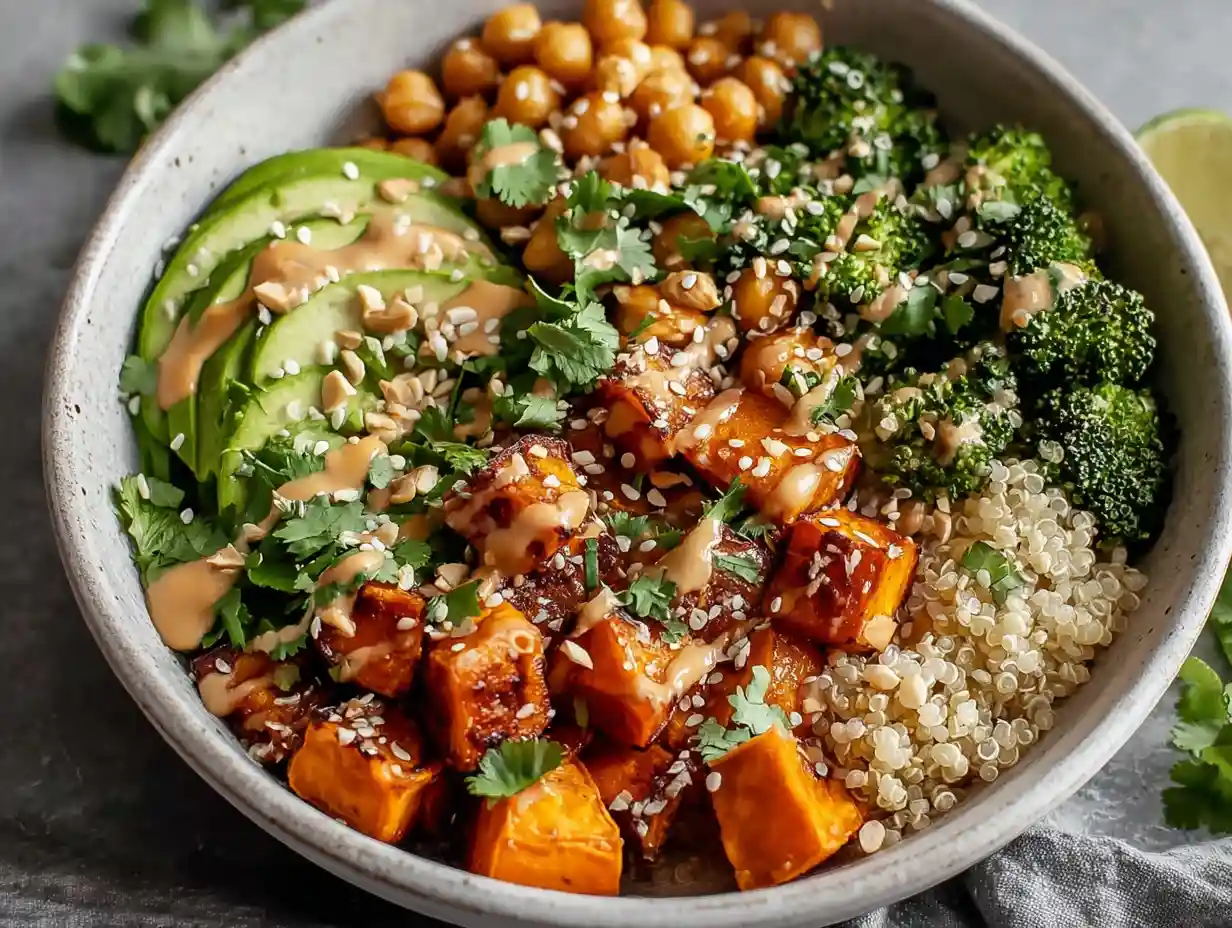

Vibrant Thai Peanut Sweet Potato Buddha Bowl
Ingredients
Equipment
Method
- Preheat the oven to 425°F.
- Toss the sweet potatoes and garlic with the olive oil, rosemary, cinnamon, salt and pepper. Spread into an even layer on a baking sheet.
- Place in the oven and bake for 15-20 minutes.
- While the potatoes are roasting, prepare the peanut sauce by combining all of the ingredients in a large blender or food processor.
- Distribute the roasted sweet potatoes, cooked quinoa, carrots, cilantro and peanuts between two bowls. Drizzle the peanut sauce over the bowls.
Nutrition
Tried this recipe?
Let us know how it was!What Exactly is a Buddha Bowl?
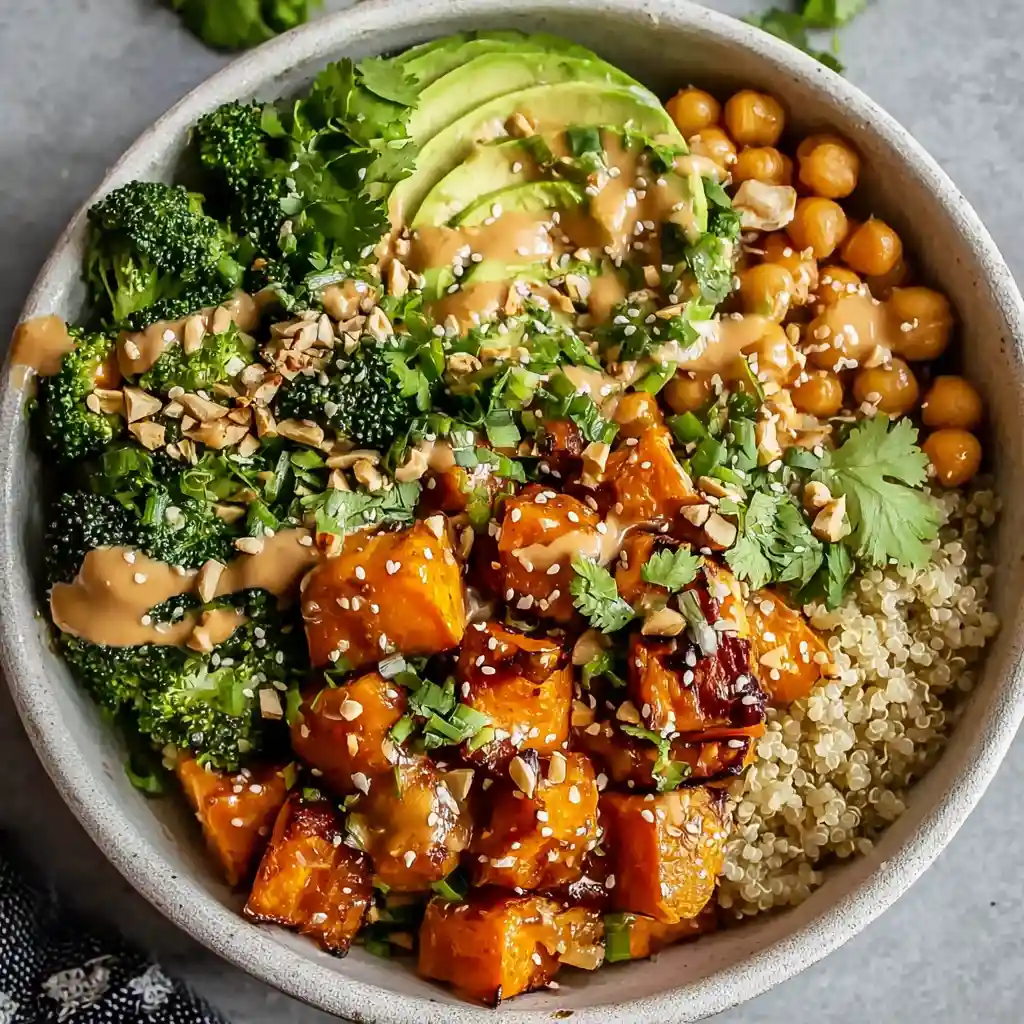
For those who might be new to the concept, a Buddha Bowl is essentially a plant-based meal served in a bowl, characterized by its visual appeal and nutritional balance. It typically features a base of grains, topped with an assortment of colorful vegetables, a protein source, and a flavorful sauce. The idea is to create a harmonious and complete meal, offering a little bit of everything in each bite. It’s about nourishing your body with a diverse range of ingredients that work together beautifully.
Why You’ll Absolutely Love This Thai Peanut Sweet Potato Buddha Bowl
I can honestly say this recipe has become a staple in my kitchen for so many reasons! Here’s why I think you’ll adore it too:
- Effortlessly Healthy and Satisfying: It’s packed with wholesome ingredients that will leave you feeling full and energized, without any of the guilt.
- A Symphony of Flavors: The combination of sweet roasted potatoes, creamy peanut sauce, and fresh cilantro is simply divine and incredibly moreish.
- Customizable to Your Liking: This recipe is a fantastic base that’s super easy to adapt with your favorite veggies or protein additions.
- Quick and Easy to Make: Despite its impressive appearance and flavor, this entire meal comes together in under an hour, perfect for busy days.
Nourish Your Body: Health Benefits of This Buddha Bowl
This Thai Peanut Sweet Potato Buddha Bowl is more than just delicious; it’s a powerhouse of nutrition. The sweet potatoes are a fantastic source of Vitamin A, crucial for vision and immune function, and they also provide a good dose of fiber to keep you feeling full.
Quinoa, a complete protein, offers all the essential amino acids your body needs, along with more fiber. And let’s not forget the healthy fats from the peanut butter and olive oil, which are wonderful for brain health and energy.
Gather Your Tools: Essential Equipment
To make preparing this delightful Thai Peanut Sweet Potato Buddha Bowl as smooth as possible, I recommend having a few key tools on hand. A sturdy baking sheet is essential for roasting those sweet potatoes perfectly.
A blender or food processor will be your best friend for whipping up that luscious peanut sauce quickly. Having a couple of large bowls for mixing and serving, along with a sharp knife for any chopping, will also make the process much easier.
Ingredients for Your Delightful Thai Peanut Sweet Potato Buddha Bowl
Here are the ingredients you’ll need to bring this vibrant meal to life. I’ve broken them down into two parts to make shopping and prepping a breeze.
For the Bowl
- 4 cups sweet potato (peeled and diced into small cubes)
- 4 cloves garlic (minced)
- ¼ cup olive oil
- 2 teaspoons fresh rosemary (chopped)
- 1 teaspoon ground cinnamon
- 1 teaspoon kosher salt
- 1 teaspoon black pepper
- 1 cup quinoa (cooked)
- ½ cup carrots (shredded)
- ¼ cup fresh cilantro
- ¼ cup peanuts (chopped)
For the Thai Peanut Sauce
- 1 ½ cups coconut milk
- 1 cup creamy peanut butter
- ¼ cup Thai red curry paste
- 2 tablespoons apple cider vinegar
- 2 tablespoons soy sauce (Tamari for gluten-free)
- ¼ cup brown sugar
- 1 tablespoon fresh lime juice
Step-by-Step Instructions: Crafting Your Thai Peanut Sweet Potato Buddha Bowl
Let’s get cooking! Follow these simple steps to create your delicious Thai Peanut Sweet Potato Buddha Bowl.
- Preheat the oven to 425°F.
- Toss the sweet potatoes and garlic with the olive oil, rosemary, cinnamon, salt and pepper. Spread into an even layer on a baking sheet.
- Place in the oven and bake for 15-20 minutes.
- While the potatoes are roasting, prepare the peanut sauce by combining all of the ingredients in a large blender or food processor.
- Distribute the roasted sweet potatoes, cooked quinoa, carrots, cilantro and peanuts between two bowls. Drizzle the peanut sauce over the bowls.
Achieving Perfection: Tips for Perfectly Roasted Sweet Potatoes
Getting those sweet potatoes just right is key to a fantastic Buddha Bowl. My biggest tip is to avoid overcrowding your baking sheet. If the potatoes are too close together, they’ll steam rather than roast, and you won’t get those lovely caramelized edges.
Make sure they’re diced into roughly uniform, small cubes so they cook evenly. Don’t be shy with the olive oil, salt, and pepper either; they really bring out the natural sweetness of the potato.
Master Your Sauce: Advanced Thai Peanut Sauce Customization
The Thai peanut sauce is the star of the show for me, and it’s so easy to tweak it to your exact preference. If you like a tangier sauce, add a little more lime juice or a splash of apple cider vinegar.
For more sweetness, a pinch of brown sugar will do the trick. If you’re craving a bit more heat, a bit more Thai red curry paste will certainly liven things up. To adjust consistency, you can add a tablespoon of water or a splash more coconut milk to thin it out, or a little more peanut butter to thicken it. For a nut-free version, try using sunflower seed butter or a tahini-based sauce.
Boost Your Bowl: Comprehensive Protein Options
While this recipe is wonderfully complete as is, I love adding extra protein sometimes. For a plant-based boost, consider adding baked or pan-fried tofu or tempeh. Just press your tofu to remove excess water, cube it, toss with a little soy sauce and oil, and bake until golden. Edamame is another simple and nutritious addition.
If you’re not strictly vegetarian, a bit of grilled chicken or shrimp also works beautifully with these flavors.
Mix It Up: Grain & Base Variations
Quinoa is my go-to, but this bowl is an incredibly versatile main dish. Brown rice or jasmine rice are classic choices that pair wonderfully with the sauce. For a different texture and nutty flavor, try millet or farro. If you’re looking for something lighter, jasmine rice noodles are a fantastic option. For a low-carb twist, you can swap the grains entirely for cauliflower rice or a bed of mixed greens like spinach or kale.
Veggie Power: Endless Vegetable Variety & Preparation
The beauty of a Buddha Bowl is its adaptability, especially with vegetables! Beyond the carrots, I often toss in some thinly sliced bell peppers, roasted broccoli florets, steamed green beans, or even some sautéed mushrooms.
For a fresh, crisp element, shredded purple cabbage or thinly sliced cucumber is lovely. You can roast, steam, sauté, or enjoy many vegetables raw to add different textures and flavors to your bowl.
Finding Your Balance: Adjusting the Spice Level
Tailoring the heat level of your Thai Peanut Sweet Potato Buddha Bowl is super simple. If you like it spicier, go ahead and add a bit more Thai red curry paste, or stir in some sriracha or a pinch of red pepper flakes to the sauce.
To temper the spice, a little extra brown sugar or a touch more lime juice can help balance the heat. You can also reduce the amount of curry paste in the sauce initially and add it in small increments until you reach your desired level of warmth.
Family Friendly: Kid-Friendly Modifications
Making this for the little ones? I’ve found a few tricks that work wonders. Try significantly reducing the curry paste in the sauce, or even omitting it and just using peanut butter, soy sauce, lime, and a touch of sweetness. Serving the components separately can also be a hit – let them build their own bowl! They might also prefer milder vegetables like steamed sweet corn or peas instead of shredded carrots.
Smart Choices: Budget-Friendly & Ingredient Sourcing Tips
To keep this delicious meal budget-friendly, I often buy pantry staples like quinoa and peanut butter in bulk. Utilizing seasonal produce can also make a big difference. When it comes to the ingredients, don’t be afraid to use frozen vegetables like edamame or corn if fresh ones aren’t available or are too pricey.
For the peanut butter, a natural, unsweetened variety is often the healthiest and most economical choice.
Prep Ahead: Meal Prep & Storage for Lasting Freshness
This Thai Peanut Sweet Potato Buddha Bowl is a meal prepper’s dream! I like to roast the sweet potatoes and cook the quinoa ahead of time. The peanut sauce stores beautifully in an airtight container in the refrigerator for up to a week.
For the best results when reheating, I often give the roasted sweet potatoes a quick crisp up in the oven or an air fryer before assembling the bowls. The sauce can also be frozen in portions for even longer storage.
Make It Shine: Serving & Presentation Tips
Presentation really does elevate the eating experience! To make your Buddha Bowl shine, arrange the components artfully in the bowl. A generous drizzle of that creamy peanut sauce over everything is a must.
For garnishes, I love topping mine with extra chopped peanuts for crunch, a sprinkle of fresh cilantro, a wedge of lime for squeezing, and sometimes a few sesame seeds or thinly sliced green onions. It makes the bowl look as good as it tastes!
Smooth Sailing: Troubleshooting Common Buddha Bowl Issues
If your sweet potatoes aren’t roasting quite right, it’s usually because the pan is too crowded. Give them more space! If your peanut sauce is too thick, thin it with a tablespoon of coconut milk or water at a time until it reaches your desired consistency. If it’s too thin, you can try whisking in a little more peanut butter or letting it simmer gently for a few minutes to reduce.
FAQs about Thai Peanut Sweet Potato Buddha Bowl
Can I use different nuts for the sauce?
Absolutely! Almond butter or cashew butter work well as substitutes for peanut butter, though they will alter the flavor profile slightly. For a nut-free option, sunflower seed butter is a great choice.
Is this recipe gluten-free?
Yes, the recipe can easily be made gluten-free by using Tamari instead of soy sauce. Ensure your Thai red curry paste is also gluten-free.
Can I make this ahead of time?
Yes! You can prepare the roasted sweet potatoes, cooked quinoa, and peanut sauce in advance and store them separately in the refrigerator. Assemble and add fresh toppings just before serving.
How long does the peanut sauce last?
The Thai peanut sauce will keep in an airtight container in the refrigerator for about 5-7 days.
Conclusion
I truly hope you enjoy making and eating this Thai Peanut Sweet Potato Buddha Bowl as much as I do. It’s a testament to how vibrant, healthy, and utterly delicious everyday cooking can be. It’s a meal that nourishes from the inside out and always leaves me feeling happy and satisfied.
Now, I’d love to hear from you! Have you tried this recipe yet? What are your favorite Buddha Bowl additions or variations? Please leave a comment below with your thoughts, or share a picture of your beautiful creation on social media – I can’t wait to see it!