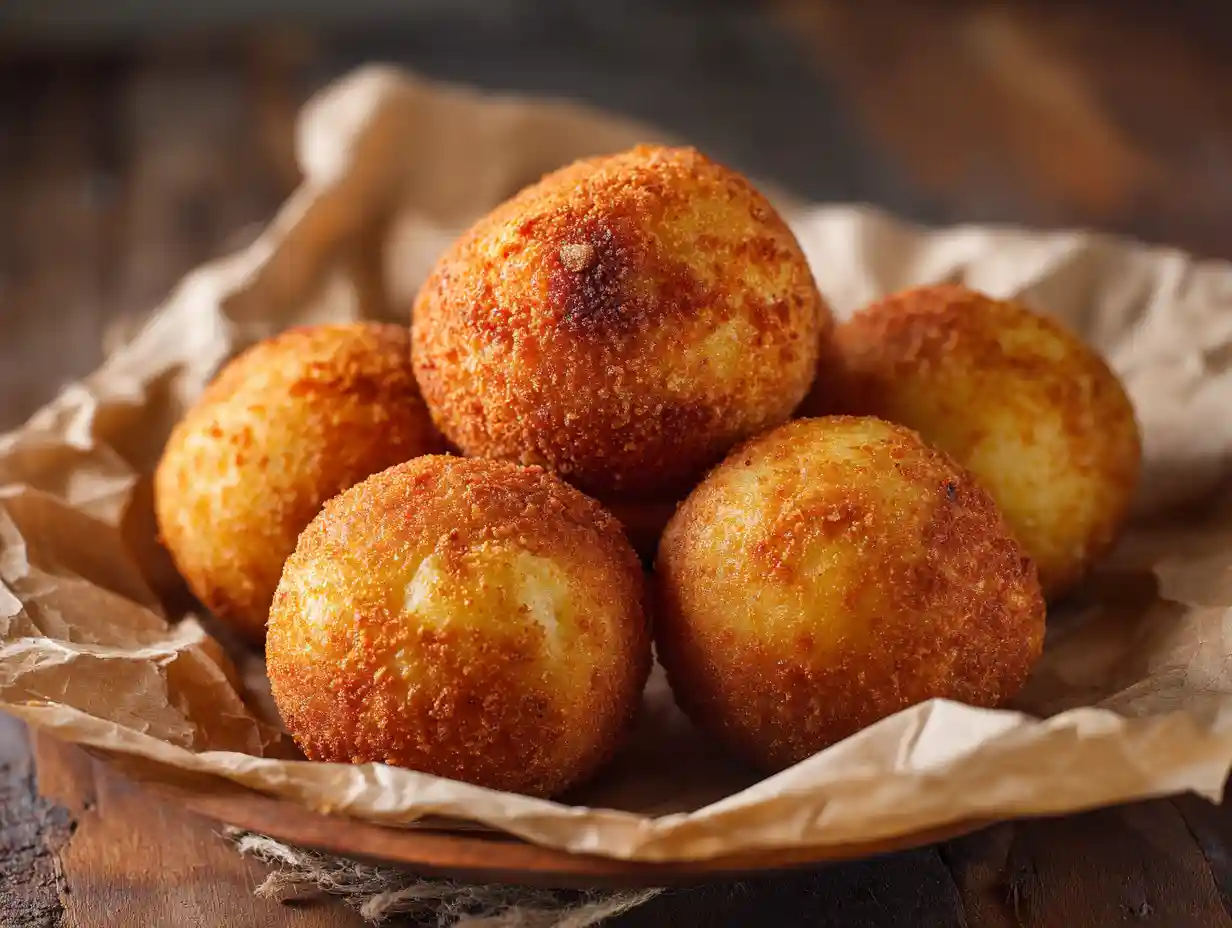

As Maya, I always feel a special warmth when I think about Puerto Rican food. It’s more than just meals; it’s about family, comfort, and sharing delicious moments together. One of my absolute favorites is the Relleno de Papa, a classic street food that’s as fun to make as it is to eat.
These savory little pockets, with their crispy golden exterior and flavorful filling, are pure joy. You can whip up this delightful treat right in your own kitchen, and I promise, it’s easier than you might think. I’ve found I can have them ready to enjoy in about 1 hour and 15 minutes.
Table of Contents

Ultimate Puerto Rican Rellenos de Papa Recipe
Ingredients
Equipment
Method
- Peel potatoes and cut into uniformly sized chunks. Place in a pot and cover with water. Salt the water about (2 tablespoons). Boil until cooked through and easily pierced with a fork, about 20 minutes.
- Drain potatoes well and return to pot. Let any excess water evaporate. Mash with 1 tablespoon of cornstarch, egg and butter.
- Flour your hands with cornstarch and flatten about 1/2 cup of mashed potatoes into a disk in the palm of your hand. Add a heaping tablespoon of picadillo to the center of the disk and bring the edges of the potato up and around the picadillo. Seal the edges and roll into a smooth ball. Repeat until all the potato has been used up, making sure to coat hands in cornstarch each time.
- Deep fry the balls in hot oil (about 350°F) about 5 minutes, turning as needed until they are golden brown all over. Serve plain or with mayoketchup or mojo de ajo for dipping, if desired.
Nutrition
Notes
Tried this recipe?
Let us know how it was!What are Puerto Rican Rellenos de Papa?
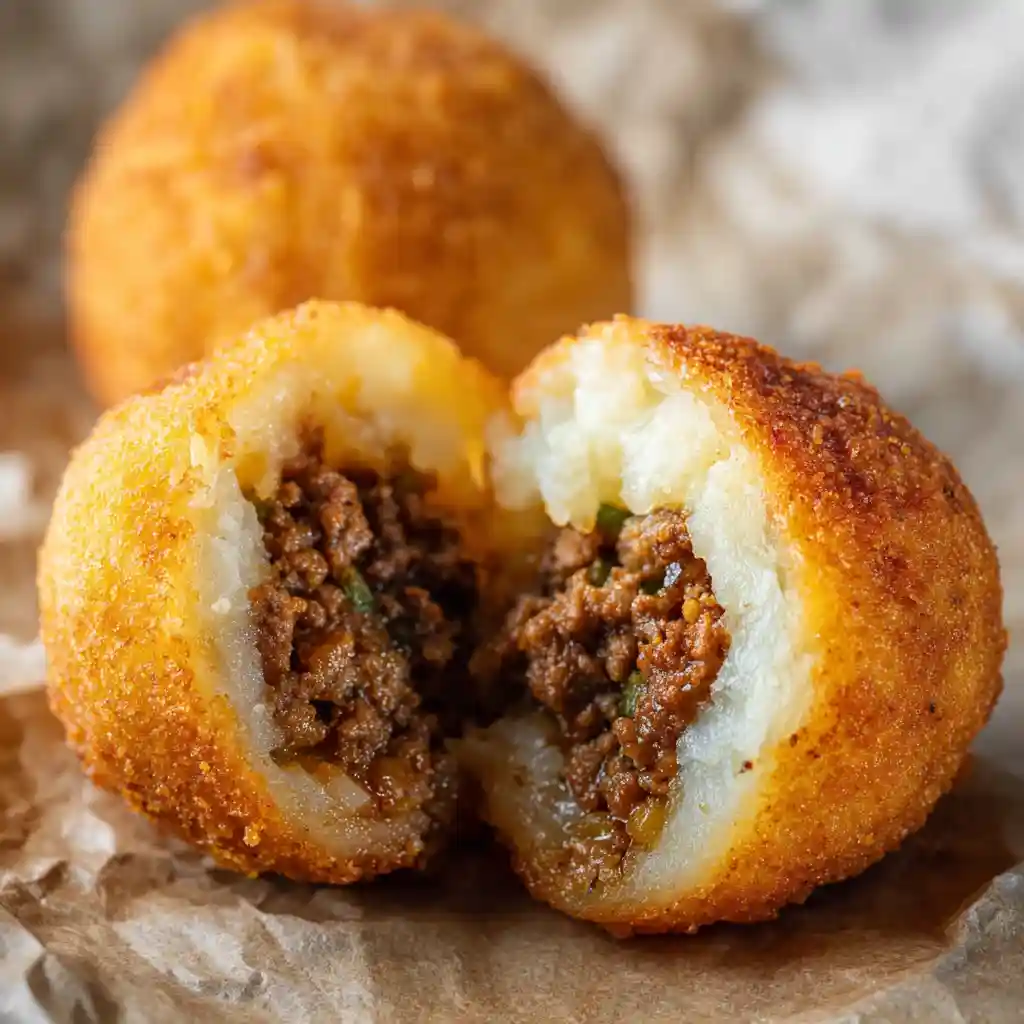
Puerto Rican Rellenos de Papa are a beloved street food snack, a true taste of the island. Imagine this: a soft, fluffy potato shell, seasoned just right, encasing a rich, savory Puerto Rican picadillo filling. Then, they’re deep-fried to a perfect golden-brown crisp. The contrast between the crunchy outside and the tender, flavorful inside is absolutely irresistible.
A Taste of Boricua History: The Story Behind Rellenos de Papa
Rellenos de Papa hold a special place in Puerto Rican culture. They’re a staple at roadside kiosks, known as chinchorros, and are a must-have at parties and family gatherings. These little flavor bombs are a testament to the island’s rich culinary heritage, representing the kind of comforting, soulful food that truly brings people together. Making them feels like a connection to generations of home cooks.
Why You’ll Love This Puerto Rican Rellenos de Papa Recipe
- Incredibly Easy to Master: I’ve simplified the process so that even if you’re new to Rellenos de Papa, you’ll be able to create them successfully. The steps are clear and manageable.
- Authentic, Crowd-Pleasing Flavor: This recipe delivers that classic Puerto Rican taste you crave, with perfectly seasoned potatoes and a delicious picadillo filling that everyone will adore.
- Versatile Cooking Options: While deep-frying is traditional and yields the best crunch, I also share tips for air frying and baking, making them accessible no matter your kitchen setup.
Essential Equipment for Perfect Rellenos
To make these delicious Rellenos de Papa, I find a few key pieces of equipment make the process much smoother.
- Large Pot: Essential for boiling the potatoes until they’re perfectly tender.
- Potato Masher: My preferred tool for getting a smooth, lump-free potato mash without making it gummy. A potato ricer also works wonderfully.
- Heavy-Bottomed Pot or Dutch Oven: This is crucial for deep frying, as it maintains a stable oil temperature.
- Deep-Fry Thermometer: Absolutely vital for ensuring your oil is at the correct temperature (350°F) for safe and even frying.
- Spider Strainer or Slotted Spoon: For safely lowering the rellenos into the hot oil and lifting them out once they’re golden brown.
Getting Started: Puerto Rican Rellenos de Papa Recipe Card
Here are the details you need to create these fantastic Rellenos de Papa right in your own kitchen.
- Yield: Approximately 8-10 rellenos
- Prep Time: 45 minutes
- Cook Time: 15 minutes
- Ingredients:
- 2 pounds potatoes
- 1 tablespoon cornstarch, plus extra for dusting
- 1 egg, lightly beaten
- 2 tablespoons butter
- 1/2 recipe Puerto Rican Picadillo (prepare this ahead of time and ensure it is cooled completely)
- Salt
- Oil for frying
- Mayoketchup or mojo de ajo, for serving
- Instructions:
- Peel potatoes and cut into uniformly sized chunks. Place in a pot and cover with water. Salt the water about (2 tablespoons). Boil until cooked through and easily pierced with a fork, about 20 minutes.
- Drain potatoes well and return to pot. Let any excess water evaporate. Mash with 1 tablespoon of cornstarch, egg and butter.
- Flour your hands with cornstarch and flatten about 1/2 cup of mashed potatoes into a disk in the palm of your hand. Add a heaping tablespoon of picadillo to the center of the disk and bring the edges of the potato up and around the picadillo. Seal the edges and roll into a smooth ball. Repeat until all the potato has been used up, making sure to coat hands in cornstarch each time.
- Deep fry the balls in hot oil (about 350°F) about 5 minutes, turning as needed until they are golden brown all over. Serve plain or with mayoketchup or mojo de ajo for dipping, if desired.
- Equipment: Large pot, potato masher, heavy-bottomed pot or Dutch oven, deep-fry thermometer, spider strainer or slotted spoon.
- Notes: It’s crucial to have your picadillo filling completely cooled and chilled before assembling the Rellenos. A warm filling can make the potato mixture too soft and difficult to work with, potentially causing them to break apart during frying.
Diving Deeper: Mastering Each Component
Crafting Your Flavorful Picadillo Filling
The heart of any Relleno de Papa is its filling, and Puerto Rican picadillo is a flavor explosion. It typically includes savory ground meat (often beef) simmered with a base of sofrito, tomatoes, olives, and capers, creating a rich, slightly tangy, and aromatic mix. While beef is traditional, I find ground pork or even ground chicken works beautifully too. The key is a well-seasoned, slightly moist, but not watery filling.
Why Cooling Your Picadillo is Key
This is one of those crucial steps I can’t stress enough. When your picadillo is piping hot or even just warm, it’s much softer and wetter. This moisture and heat will transfer to the potato mixture, making it sticky and very difficult to handle. A cooled, firm picadillo is essential for forming well-sealed Rellenos that hold their shape during the frying process. It prevents the potato from becoming too pliable and leads to a much cleaner, more successful result.
Perfecting Your Potato Mixture
The potato shell is just as important as the filling; it needs to be firm enough to hold everything but soft and fluffy inside.
Choosing the Right Potatoes
For Rellenos de Papa, I always reach for starchy potatoes like Russets or Idaho potatoes. Their high starch content breaks down beautifully when boiled and mashed, creating a fluffy texture that’s perfect for shaping. Waxy potatoes, on the other hand, tend to be too moist and can result in a gummy shell that doesn’t hold together well.
The Art of Mashing
After boiling your potatoes until fork-tender, it’s vital to mash them thoroughly. I aim for a completely lump-free texture. Using a potato masher or a ricer is best because it avoids overworking the potatoes, which can release too much moisture and create a gummy consistency. Over-processing in a food processor is a common mistake that leads to that undesirable texture. The tablespoon of cornstarch acts as a binder here, helping the potato mixture hold its shape without making it dense.
Why Chilling the Potatoes Matters
Just like the picadillo, the mashed potato mixture benefits immensely from chilling. Once I’ve mashed the potatoes with the cornstarch, egg, and butter, I let the mixture cool down and then pop it in the refrigerator for at least 30 minutes. Cold mashed potatoes are much firmer and less sticky. This makes them incredibly easy to handle when you’re forming the Rellenos, preventing them from sticking to your hands and helping you achieve a nice, smooth ball without frustration.
Forming & Sealing Your Rellenos Like a Pro
This is where the magic happens, turning simple ingredients into delightful Rellenos de Papa. I always dust my hands generously with cornstarch each time I handle the potato mixture; this prevents sticking and helps create a smooth exterior.
I take about a 1/2 cup of the chilled potato mixture and flatten it into a disk in my palm. Then, I add a generous tablespoon of the cooled picadillo filling right in the center. The key is to carefully bring the edges of the potato disk up and around the filling, pinching them together to seal completely. Once sealed, I gently roll it into a smooth ball. Repeating this process, always recoating my hands with cornstarch, ensures each Relleno is well-formed and ready for frying.
The Plastic Wrap Method (Optional Tip)
If you find shaping challenging, a little trick I sometimes use is plastic wrap. Lay out a piece of plastic wrap, place a portion of the potato mixture on it, and then place the picadillo filling on top. Use the plastic wrap to help you gather the potato around the filling and then twist the wrap to form a tight ball. Then, unwrap and give it a final roll to ensure it’s perfectly smooth.
Common Forming Mistakes to Avoid
- Overfilling: Using too much picadillo can make it difficult to seal the potato completely, leading to leaks during frying. Stick to a heaping tablespoon.
- Not Sealing Properly: Any gaps or weak spots in the seal will allow oil to seep into the filling and can cause the Relleno to burst. Pinch those seams tightly!
- Uneven Thickness: If the potato shell is too thin in some spots, it might not hold up during frying. Aim for a consistent thickness all around.
Cooking Your Puerto Rican Rellenos de Papa
The final step is turning these formed balls into golden, crispy delights.
Traditional Deep Frying
Deep frying is the classic method, and it yields that irresistible crispness. I heat my oil to about 350°F. It’s important to work in batches, so you don’t overcrowd the pot, which can lower the oil temperature too much. Gently place the Rellenos into the hot oil using a spider strainer or slotted spoon.
I fry them for about 5 minutes, turning them as needed. You’re looking for a rich, deep golden brown color all over. When they’re done, they should feel firm and sound crisp when you gently tap them. Lift them out with your spider strainer and drain them on a wire rack set over a baking sheet to keep them crisp.
Detailed Frying Indicators
You’ll know they’re ready when they float evenly in the oil, have developed a uniform, deep golden hue, and emit a satisfying crisp sound when tapped. The oil should be gently bubbling around them, indicating a consistent frying temperature.
Air Frying for a Lighter Touch
If you’re looking for a slightly lighter version, the air fryer is a great option. Preheat your air fryer to 375°F (190°C). Lightly spray or brush the formed Rellenos with oil to help them crisp up. Place them in a single layer in the air fryer basket, making sure not to overcrowd. Air fry for about 12-15 minutes, flipping halfway through, until they are golden brown and heated through. They’ll be wonderfully crisp, though not quite as rich or uniformly browned as deep-fried ones.
Baking for a Different Texture
For a more hands-off approach, baking is possible. Preheat your oven to 400°F (200°C). Place the formed Rellenos on a baking sheet lined with parchment paper. Brush them lightly with oil. Bake for about 25-30 minutes, flipping halfway through, until they are golden and heated through. Baked Rellenos will have a golden crust but a softer, more casserole-like texture compared to the deep-fried crispness.
Troubleshooting Common Rellenos de Papa Issues
Even with the best intentions, sometimes things don’t go exactly as planned. Here are a few common issues and how I tackle them.
Why Do My Rellenos Fall Apart?
This is often due to a few things. If your picadillo or potato mixture wasn’t chilled enough, it won’t hold its shape. Make sure both are cold and firm. Also, check that your oil is hot enough. If the oil is too cool, the Rellenos won’t get a good crisp seal quickly, making them more prone to breaking. Finally, ensure you’ve sealed them very well. Any little gap can be an entry point for oil and cause them to disintegrate.
My Potato Mixture is Too Sticky/Gummy.
This usually happens if the potatoes were over-mashed or if they weren’t drained thoroughly enough. If it’s slightly sticky, try adding just a little more cornstarch, a teaspoon at a time, until it’s more manageable. If it’s quite gummy, it might be a sign the potatoes were too moist to begin with. Ensure you let them steam dry after draining.
The Filling is Bland/Dry.
If your picadillo filling tastes a little bland or feels dry after chilling, you can sometimes rescue it. For flavor, a tiny pinch more salt or a dash of your favorite hot sauce can make a difference. If it’s dry, stir in a tablespoon of tomato sauce or a little bit of the reserved cooking liquid from when you made the picadillo. Just make sure it’s not too wet before filling.
Serving Suggestions & Dipping Sauces
Rellenos de Papa are fantastic on their own, but a good dipping sauce elevates them even further.
Classic Mayo-Ketchup
This is my go-to, and it’s incredibly simple. I just mix equal parts mayonnaise and ketchup. For a little extra zest, I might add a tiny splash of lime juice or a pinch of garlic powder. It’s the perfect creamy, tangy counterpoint to the crispy Relleno.
Other Ideas
Besides the classic mayo-ketchup, mojo de ajo (a garlicky olive oil sauce) is another traditional favorite that is absolutely delicious. A simple spicy aioli or even just a good quality hot sauce also works wonderfully. They make for a fantastic appetizer, a delicious hearty snack, or even as part of a larger meal alongside rice and beans.
Storing & Freezing Your Puerto Rican Rellenos de Papa
Leftovers are a good thing, especially with Rellenos de Papa!
Storing: Once cooled, you can store cooked Rellenos in an airtight container in the refrigerator for up to 3 days. To reheat, I find baking them in a moderate oven (around 350°F) for about 10-15 minutes until heated through and crisp again is best.
Freezing: You can freeze them either uncooked or cooked.
- Uncooked: Form the Rellenos, place them on a baking sheet lined with parchment paper without touching, and freeze until solid. Then, transfer them to a freezer bag. When ready to cook, you can fry them directly from frozen, adding a few extra minutes to the cooking time.
- Cooked: Allow cooked Rellenos to cool completely. Then, freeze them in a single layer on a baking sheet until solid, before transferring to a freezer bag. Reheat as mentioned above.
Swaps & Substitutions for Your Rellenos
I love how versatile this recipe is. Here are some ways you can adapt it.
| Ingredient | Substitution/Variation | Notes |
|---|---|---|
| Potatoes | Yuca (Cassava) | Creates a denser texture, often called “Rellenos de Yuca.” Requires similar preparation. |
| Picadillo | Ground Pork, Ground Chicken, Ground Turkey | Adjust seasonings as needed. |
| Vegetarian/Vegan Ground “Meat” | Ensure it’s well-seasoned. | |
| Cornstarch | All-purpose flour | Use slightly less flour as a binder; cornstarch provides a crisper texture. |
| Butter | Olive oil, vegan butter | For dairy-free options. |
| Egg | Flax egg (1 tbsp ground flaxseed + 3 tbsp water), aquafaba | For vegan options, primarily as a binder. May slightly alter texture. |
| Picadillo Add-ins | Raisins, different types of olives (manzanilla, queen), capers, hard-boiled eggs | For nuanced flavor profiles. |
Dietary Adaptations: Vegetarian & Gluten-Free Options
Making these Rellenos dietary-friendly is quite straightforward. The recipe is naturally gluten-free if you use cornstarch, as it’s derived from corn.
For a vegetarian or vegan version, the key is in the picadillo filling. You can use a well-seasoned plant-based ground “meat” alternative or a mixture of finely chopped mushrooms and vegetables. Ensure your picadillo seasoning is also vegetarian/vegan-friendly.
For the binding components in the potato mixture (egg and butter), you can use a flax egg and vegan butter or olive oil as noted in the table above.
FAQs about Puerto Rican Rellenos de Papa
Can I make Puerto Rican Rellenos de Papa ahead of time?
Yes, you can prepare the Rellenos entirely, chill them, and then fry them later. You can also make them and freeze them uncooked for up to a month.
What kind of oil is best for frying rellenos?
A neutral oil with a high smoke point is best, such as vegetable oil, canola oil, or peanut oil. You need enough oil to submerge the Rellenos, so a heavy-bottomed pot is ideal.
Can I use leftover mashed potatoes for rellenos?
While you can, I don’t always recommend it if they’ve been sitting in the fridge for a while. Mashed potatoes can become a bit gummy or dry over time. If you do use them, ensure they are plain mashed potatoes (no butter or milk added yet) and that they are not too sticky. You may need to adjust the cornstarch and egg accordingly.
Are Rellenos de Papa spicy?
Traditionally, Rellenos de Papa are not spicy unless the picadillo filling itself is made with added heat. My standard picadillo recipe doesn’t include chili peppers, but you can certainly add some diced jalapeño or a pinch of cayenne to the picadillo if you like a spicy kick!
Conclusion
There you have it – my guide to making authentic and incredibly delicious Puerto Rican Rellenos de Papa! I truly believe that cooking these little pockets of joy brings a special kind of happiness to my kitchen, and I hope it does for yours too. They are a wonderful way to savor the rich flavors of Puerto Rico.
I would absolutely love to hear about your experience making them. Did you try a different picadillo variation? What was your favorite dipping sauce? Please leave a comment below with your thoughts, questions, or any tips you discovered! And if you share your culinary creations, be sure to tag us so we can see your amazing Rellenos de Papa!