
Introduction
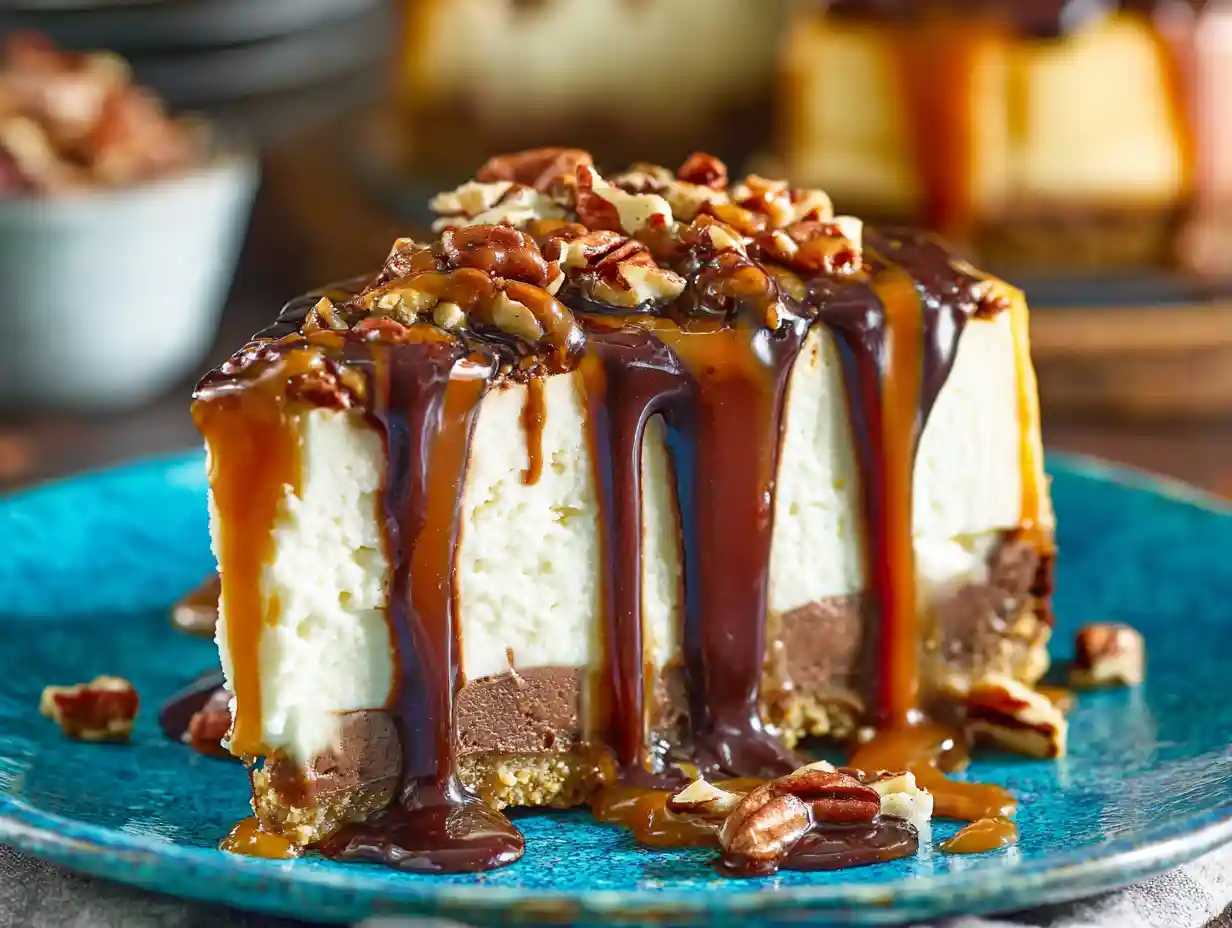
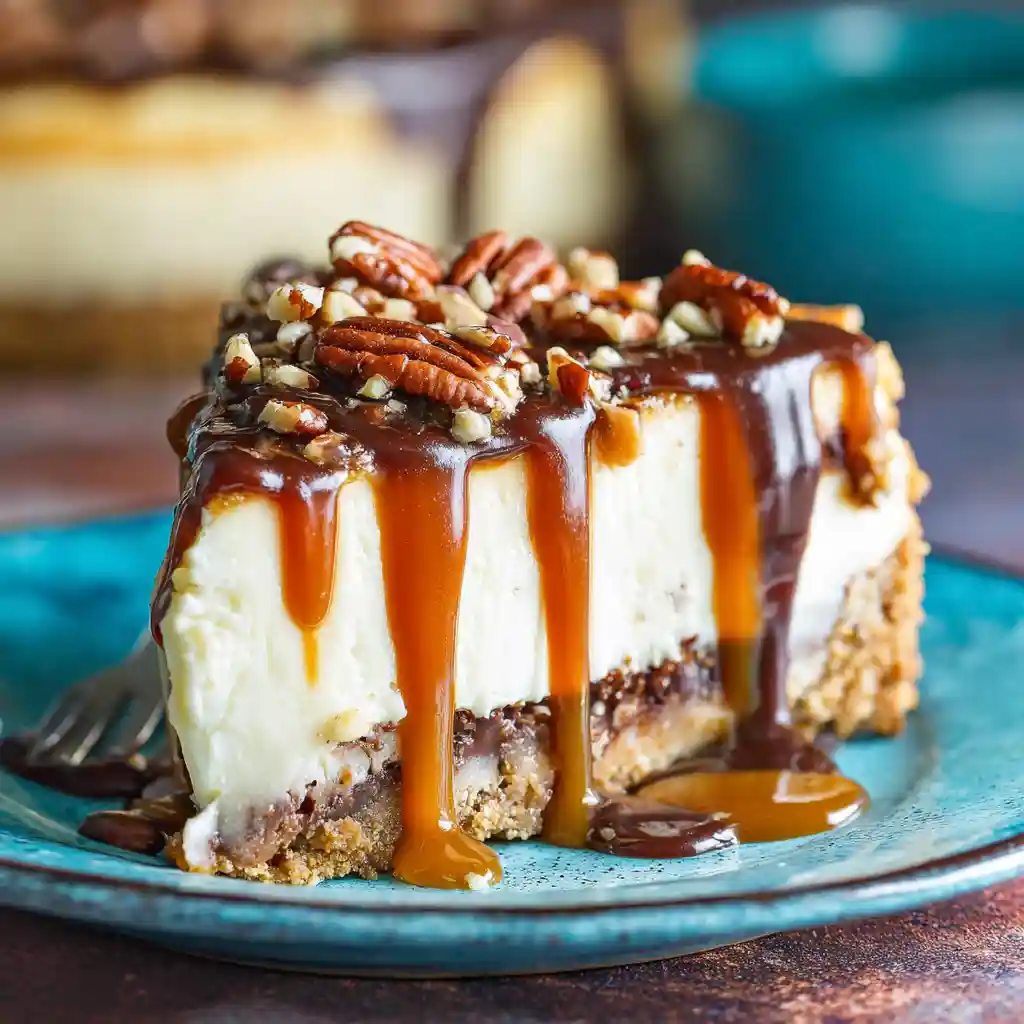
One of my favorite things to do is whip up a dessert that feels both special and incredibly comforting, and this Turtle Cheesecake is exactly that. It’s a symphony of rich chocolate, gooey caramel, and crunchy pecans all wrapped up in a creamy cheesecake hug. I know it sounds like a lot of components, but trust me, the end result is so worth the effort.
You’re looking at a total time commitment of about 7-8 hours, and that includes a good chunk of chilling time to let all those amazing flavors meld together. Get ready to impress yourself and everyone you share this with.
Table of Contents

The Ultimate Turtle Cheesecake Recipe
Ingredients
Equipment
Method
- To make the caramel sauce, pour the sugar into an even layer in a large saucepan.
- Heat on medium-high heat, whisking the sugar until melted. The sugar will clump up first, but will eventually completely melt. This should take about 10 minutes.
- Once the sugar has melted, stop whisking and allow to cook until the sugar has turned to a little darker amber color. You may notice a nutty aroma. The change in color will happen quickly, so don’t let it go too long or get too dark or it’ll burn. Remove the caramel from the heat.
- Add the butter and whisk until combined. The mixture will bubble up quite a bit, but keep whisking until all the butter has melted and combined.
- Slowly pour the heavy cream into the caramel and whisk until incorporated. I find it can help to add just a bit at a time until the caramel starts to thin out, then you can add the rest. Whisk until well incorporated and smooth.
- Set about 1 cup of caramel sauce aside for topping. Add the flour and pecan chips to the remaining caramel and set that aside.
- To make the cheesecake crust, preheat oven to 325°F (163°C). Line a 9-inch (23cm) springform pan with parchment paper in the bottom and grease the sides.
- Combine the crust ingredients in a small bowl. Press the mixture into the bottom and up the sides of the springform pan.
- Bake the crust for 10 minutes, then set aside to cool.
- Cover the outsides of the pan with aluminum foil so that water from the water bath cannot get in (see how I prepare my pan for a water bath). Set prepared pan aside.
- Reduce oven temperature to 300°F (148°C).
- Pour the caramel sauce with the pecans and flour into the bottom of the crust and spread into an even layer.
- To make the cheesecake filling, put the chocolate chips in a small bowl.
- Heat the heavy whipping cream just until it begins to boil, then pour over the chocolate chips. Allow it to sit for 2-3 minutes, then whisk until smooth.
- Pour the chocolate into an even layer over the caramel sauce in the crust.
- In a large bowl, beat the cream cheese, brown sugar and flour on low speed until well combined and smooth. Be sure to use low speed to reduce the amount of air added to the batter, which can cause cracks. Scrape down the sides of the bowl.
- Add the sour cream and vanilla extract and mix on low speed until well combined.
- Add the eggs one at a time, mixing slowly to combine after each addition. Scrape down the sides of the bowl as needed to make sure everything is well combined.
- Pour the cheesecake batter into the crust, over the chocolate.
- Place the springform pan inside another larger pan. Fill the outside pan with enough warm water to go about halfway up the sides of the springform pan. The water should not go above the top edge of the aluminum foil on the springform pan.
- Bake for 1 hour 35 minutes. The center should be set, but still jiggly.
- Turn off the oven and leave the door closed for 30 minutes. The cheesecake will continue to cook, but slowly begin to cool as well.
- Crack the door of the oven for 30 minutes to allow the cheesecake to continue to cool slowly. This process helps prevent cracking.
- Remove the cheesecake from the oven and remove the water bath and wrapping.
- Pour about 1/2 cup of the remaining caramel sauce over the top of the cheesecake and spread into an even layer. If the caramel sauce has firmed up too much to pour, heat it up for about 10 seconds.
- Refrigerate cheesecake until completely cool and firm, 5-6 hours. When the cheesecake is cool and firm, remove it from the springform pan and place on a serving dish.
- Place the chocolate chips for the drizzle in a small bowl. Heat the heavy whipping cream just until it begins to boil, then pour over the chocolate chips. Allow it to sit for 3-4 minutes, then whisk until smooth.
- Drizzle the remaining caramel sauce and chocolate sauce over the cheesecake and sprinkle with a few more pecan chips. Refrigerate cheesecake until ready to serve.
Nutrition
Tried this recipe?
Let us know how it was!Why You’ll Fall in Love with This Turtle Cheesecake
- The Perfect Balance: This isn’t just a sweet dessert; it strikes that delightful sweet and salty balance that makes every bite interesting. The salted butter in the caramel and crust plays so well with the rich chocolate and creamy filling.
- Decadent Layers of Flavor: You get the luscious, homemade caramel, the satisfying crunch of pecans, and the deep flavor of semi-sweet chocolate, all working together in harmony. It’s like a gourmet candy bar in cheesecake form.
- Unbelievably Creamy Texture: I’ve found the key to that signature smooth, dense, and creamy cheesecake texture. It’s a texture that melts in your mouth, providing a luxurious contrast to the other elements.
What is Turtle Cheesecake?
Turtle Cheesecake is a dream dessert inspired by the classic Turtle candies. These candies are famous for their delightful combination of chocolate, caramel, and pecans, arranged to resemble a turtle. My cheesecake version captures that exact flavor profile.
It features a creamy, rich cheesecake filling layered with decadent caramel and chocolate, all studded with plenty of crunchy pecans. It’s a sweet, salty, and nutty indulgence that’s utterly irresistible.
The History of Turtle Candies
The story behind Turtle candies dates back to the early 20th century. They are believed to have originated in the United States, with Dean & DeLuca and later Laura Secor credited for their popularization.
The name “Turtle” came about simply because their unique clustered shape, made from three pecan halves, caramel, and chocolate, resembled the shelled reptile. Their simple yet divine combination of textures and flavors quickly made them a confectionery classic.
Ingredients for the Best Turtle Cheesecake
Gathering the ingredients is the first step to creating this masterpiece. I’ve carefully selected each one to ensure the best flavor and texture. Using full-fat cream cheese is non-negotiable for that classic creamy density.
For the chocolate elements, I prefer semi-sweet chocolate chips for a good balance of sweetness and cocoa flavor that pairs perfectly with the caramel.
For the Caramel Sauce
- 2 cups (414g) sugar
- 1/2 cup (112g) salted butter, room temperature
- 1 cup (240ml) heavy whipping cream, room temperature
- 1/4 cup (28g) pecan chips
For the Graham Cracker Crust
- 2 cups (268g) graham cracker crumbs
- 1/2 cup (112g) salted butter, melted
- 3 tbsp brown sugar
- 1/4 cup (28g) pecan chips
For the Turtle Cheesecake Filling
- 24 oz (678g) cream cheese, room temperature
- 1 cup (144g) light brown sugar
- 3 tbsp (24g) all-purpose flour
- 1 cup (230g) sour cream
- 1 1/2 tbsp vanilla extract
- 3 large eggs
- 2 oz (1/3 cup | 58g) semi-sweet chocolate chips
- 6 tbsp (90ml) heavy whipping cream
For the Chocolate Drizzle
- 4 oz (2/3 cup | 116g) semi-sweet chocolate chips
- 6 tbsp (90ml) heavy whipping cream
Equipment You’ll Need
To make this cheesecake a success, you’ll need a few key pieces of equipment.
- 9-inch (23cm) springform pan: This is essential for easily removing the cheesecake without damaging it.
- Large saucepan: For making the caramel sauce.
- Electric mixer (handheld or stand mixer): For beating the cheesecake filling until smooth.
- Large bowl and medium bowls: For mixing ingredients and preparing ganache.
- Whisk: For combining the caramel sauce and ganache.
- Spatula: For scraping down bowls and spreading batter.
- Aluminum foil: To protect the springform pan during the water bath.
- Larger baking pan or roasting pan: To create the water bath.
- Measuring cups and spoons.
If you don’t have a springform pan, you can try using a regular 9-inch pie plate or cake pan. However, getting the cheesecake out intact can be tricky. You might need to gently loosen the sides with a thin knife.
How to Make Turtle Cheesecake: Step-by-Step Instructions
Let’s get baking! Follow these steps carefully for a truly amazing Turtle Cheesecake.
Making the Caramel Sauce
- To make the caramel sauce, pour the sugar into an even layer in a large saucepan.
- Heat on medium-high heat, whisking the sugar until melted. The sugar will clump up first, but will eventually completely melt. This should take about 10 minutes.
- Once the sugar has melted, stop whisking and allow to cook until the sugar has turned to a little darker amber color. You may notice a nutty aroma. The change in color will happen quickly, so don’t let it go too long or get too dark or it’ll burn. Remove the caramel from the heat.
- Add the butter and whisk until combined. The mixture will bubble up quite a bit, but keep whisking until all the butter has melted and combined.
- Slowly pour the heavy cream into the caramel and whisk until incorporated. I find it can help to add just a bit at a time until the caramel starts to thin out, then you can add the rest. Whisk until well incorporated and smooth.
- Set about 1 cup of caramel sauce aside for topping. Add the flour and pecan chips to the remaining caramel and set that aside.
A Quick Note on Caramel: Caramelizing sugar can be a bit intimidating, but the key is patience and watching closely. If it clumps, keep whisking gently on medium heat. Once it starts melting, resist the urge to stir too much. The color change is rapid, so be ready to pull it off the heat as soon as it reaches that beautiful amber hue. Burning is the enemy here, leading to a bitter taste.
Preparing the Crust
- To make the cheesecake crust, preheat oven to 325°F (163°C). Line a 9-inch (23cm) springform pan with parchment paper in the bottom and grease the sides.
- Combine the crust ingredients in a small bowl. Press the mixture into the bottom and up the sides of the springform pan.
- Bake the crust for 10 minutes, then set aside to cool.
Making the Turtle Cheesecake Filling
- Cover the outsides of the pan with aluminum foil so that water from the water bath cannot get in (see how I prepare my pan for a water bath). Set prepared pan aside.
- Reduce oven temperature to 300°F (148°C).
- Pour the caramel sauce with the pecans and flour into the bottom of the crust and spread into an even layer.
- To make the cheesecake filling, put the chocolate chips in a small bowl.
- Heat the heavy whipping cream just until it begins to boil, then pour over the chocolate chips. Allow it to sit for 2-3 minutes, then whisk until smooth. This creates a quick chocolate ganache.
- Pour the chocolate into an even layer over the caramel sauce in the crust.
- In a large bowl, beat the cream cheese, brown sugar and flour on low speed until well combined and smooth. Be sure to use low speed to reduce the amount of air added to the batter, which can cause cracks. Scrape down the sides of the bowl.
- Add the sour cream and vanilla extract and mix on low speed until well combined.
- Add the eggs one at a time, mixing slowly to combine after each addition. Scrape down the sides of the bowl as needed to make sure everything is well combined.
Baking the Turtle Cheesecake
- Pour the cheesecake batter into the crust, over the chocolate.
- Place the springform pan inside another larger pan. Fill the outside pan with enough warm water to go about halfway up the sides of the springform pan. The water should not go above the top edge of the aluminum foil on the springform pan.
- Bake for 1 hour 35 minutes. The center should be set, but still jiggly.
- Turn off the oven and leave the door closed for 30 minutes. The cheesecake will continue to cook, but slowly begin to cool as well.
- Crack the door of the oven for 30 minutes to allow the cheesecake to continue to cool slowly. This process helps prevent cracking.
- Remove the cheesecake from the oven and remove the water bath and wrapping.
About the Water Bath: The water bath, or bain-marie, is crucial for even baking and preventing cracks. It creates a steamy environment that gently cooks the cheesecake, ensuring a creamy texture without overcooking the edges. Make sure your foil wrapping is watertight to avoid any leaks into your delicate cheesecake!
If you’re looking for an alternative to a water bath, you can try baking at a slightly lower temperature, around 275°F (135°C), for a longer period, checking for doneness frequently. However, the water bath method is generally preferred for the best results.
Decorating the Turtle Cheesecake
- Pour about 1/2 cup of the remaining caramel sauce over the top of the cheesecake and spread into an even layer. If the caramel sauce has firmed up too much to pour, heat it up for about 10 seconds.
- Refrigerate cheesecake until completely cool and firm, 5-6 hours. When the cheesecake is cool and firm, remove it from the springform pan and place on a serving dish.
- Place the chocolate chips for the drizzle in a small bowl. Heat the heavy whipping cream just until it begins to boil, then pour over the chocolate chips. Allow it to sit for 3-4 minutes, then whisk until smooth.
- Drizzle the remaining caramel sauce and chocolate sauce over the cheesecake and sprinkle with a few more pecan chips. Refrigerate cheesecake until ready to serve.
Alternative Crust Options
While the classic graham cracker crust is fantastic, there are so many other delicious options to explore!
| Crust Option | Description | Adjustments Needed |
|---|---|---|
| Oreo Crust | Made from crushed Oreo cookies, offering a rich chocolate flavor and satisfying crunch. | Use about 2.5 cups of finely crushed Oreos (filling included), and 6-8 tbsp melted butter. You might omit the brown sugar and pecan chips from the original crust recipe. Bake as directed. |
| Biscoff Crust | Features the warm, spiced flavor of Biscoff cookies, adding a unique and comforting note. | Use about 2.5 cups of finely crushed Biscoff cookies, and 6-8 tbsp melted butter. You might omit the brown sugar and pecan chips. Bake as directed. |
| Nut-Based Crust | A gluten-free option using finely ground nuts like almonds or walnuts for a wholesome, nutty base. | Use 2 cups of finely ground nuts, 2 tbsp sweetener (sugar or maple syrup), and 4-6 tbsp melted butter. You might omit the brown sugar and pecan chips. Bake as directed. Ensure nuts are finely ground to mimic graham cracker texture. |
| Chocolate Cookie Crust | Similar to Oreo but can be made with any chocolate sandwich cookie for a deeper chocolate flavor. | Use about 2.5 cups of finely crushed chocolate sandwich cookies, and 6-8 tbsp melted butter. You might omit the brown sugar and pecan chips. Bake as directed. |
Tips for Preventing Cracks and Other Cheesecake Troubleshooting
Cheesecake can sometimes be a bit finicky, but don’t worry! Here are some tips to ensure a smooth, delicious result:
- Cracks: The most common culprit is over-baking or rapid temperature changes. Using a water bath, mixing the batter on low speed to avoid incorporating too much air, and allowing the cheesecake to cool slowly in the oven are your best defenses. If you do get a crack, don’t despair! A generous topping of caramel and chocolate sauce can hide a multitude of sins.
- Gummy Texture: This usually happens if the cheesecake is underbaked. Ensure the center is still slightly jiggly when you remove it from the oven; it will set up as it cools.
- Uneven Baking: A water bath helps immensely with this. It ensures the cheesecake cooks gently and evenly from all sides. Make sure your oven temperature is accurate as well. For more on ensuring even heat distribution, you can read about how ovens work.
- Sinking in the Middle: This can be due to underbaking or too much air incorporated into the batter. Following the cooling steps precisely can help minimize this.
- Lumpy Filling: Make sure your cream cheese is truly at room temperature and very soft. Beat it well on its own before adding other ingredients to ensure a completely smooth base.
Serving Suggestions
This Turtle Cheesecake is a showstopper on its own, but here are a few ideas to elevate your serving experience:
- Coffee or Tea: A rich, dark roast coffee or a smooth black tea complements the deep flavors of chocolate and caramel beautifully.
- Wine Pairing: A port wine or a late-harvest Zinfandel can stand up to the sweetness and richness of the cheesecake.
- Ice Cream: A scoop of vanilla bean ice cream alongside a slice of this cheesecake is pure decadence.
- Fresh Berries: A small side of fresh raspberries or strawberries can offer a bright, tart contrast to the rich dessert.
Storing Your Turtle Cheesecake
Proper storage will keep your cheesecake tasting amazing.
- Leftovers: Once cooled completely, cover the cheesecake tightly with plastic wrap or place it in an airtight container. It can be stored in the refrigerator for up to 3-4 days.
- Freezing: You can freeze portions or the entire cheesecake. Wrap it very well in plastic wrap, followed by a layer of aluminum foil or a freezer-safe container. It will keep in the freezer for up to 1-2 months.
- Thawing: To thaw, remove the cheesecake from the freezer and let it stand in the refrigerator overnight. This is the best way to ensure it retains its texture.
Frequently Asked Questions
Let’s dive into some common questions I get about this delightful dessert!
Why is it called Turtle Cheesecake?
It’s called Turtle Cheesecake because it’s inspired by the classic “Turtle” candy. Just like the candy, this cheesecake features the signature combination of chocolate, caramel, and pecans, creating a flavor profile reminiscent of those beloved treats.
Can I use a different type of nut?
Absolutely! While pecans are traditional for Turtle candies and this cheesecake, you can certainly experiment. Walnuts are a fantastic substitute and offer a similar earthy flavor. Even lightly toasted almonds could work if you enjoy them. Just be sure they are roughly chopped to mimic the texture of pecan chips.
Can I use a different type of sweetener?
For the caramel sauce, granulated sugar is best for proper caramelization. For the cheesecake filling, while light brown sugar provides moisture and a lovely caramel note, you could experiment with dark brown sugar for a richer flavor, or even a granulated sugar, though you might lose a bit of that distinct caramel depth. Artificial sweeteners can behave differently in baking and might alter the texture and flavor significantly, so I don’t recommend them here.
Can I make this dairy-free?
Making this cheesecake completely dairy-free would be quite challenging, as dairy is fundamental to the texture and flavor of cream cheese, butter, and heavy cream. You might be able to experiment with dairy-free cream cheese alternatives, vegan butter, and full-fat coconut milk or other non-dairy creams for the caramel and ganache, but the results could vary significantly.
Can I make turtle cheesecake gluten-free?
Yes, you can! To make this gluten-free, ensure your graham cracker crumbs are certified gluten-free. Alternatively, use a gluten-free cookie crust like an almond-based crust as described in the “Alternative Crust Options” section, or a gluten-free chocolate cookie crust. The filling itself is naturally gluten-free, as I use a small amount of flour for structure. You could substitute this with a gluten-free all-purpose flour blend or cornstarch if you’re very sensitive.
Can I halve the recipe?
Halving this recipe would require some adjustments, especially with baking times. You’d likely need a smaller pan (perhaps an 8-inch springform pan) and would need to significantly reduce the baking time. I haven’t tested it, so you’d be venturing into experimental territory, but it’s certainly possible if you’re comfortable with making educated guesses on baking duration.
What if I don’t have a springform pan?
If you don’t have a springform pan, you can bake this in a regular 9-inch pie plate or a deep 9-inch cake pan. However, removing the cheesecake from these pans without damaging it can be difficult. You might need to carefully loosen the edges with a thin, flexible spatula or knife before attempting to invert it onto a serving plate. A deep pan is preferable to accommodate the filling.
Conclusion
And there you have it, my friends, a truly spectacular Turtle Cheesecake that brings together all the best flavors and textures into one unforgettable dessert. It’s rich, it’s decadent, and it’s made with love, right from my kitchen to yours. I hope you adore making and devouring this as much as I do.
If you give this recipe a try, please come back and leave a comment below to tell me all about it! I’d love to hear your thoughts or see any pictures you’d like to share. Happy baking!