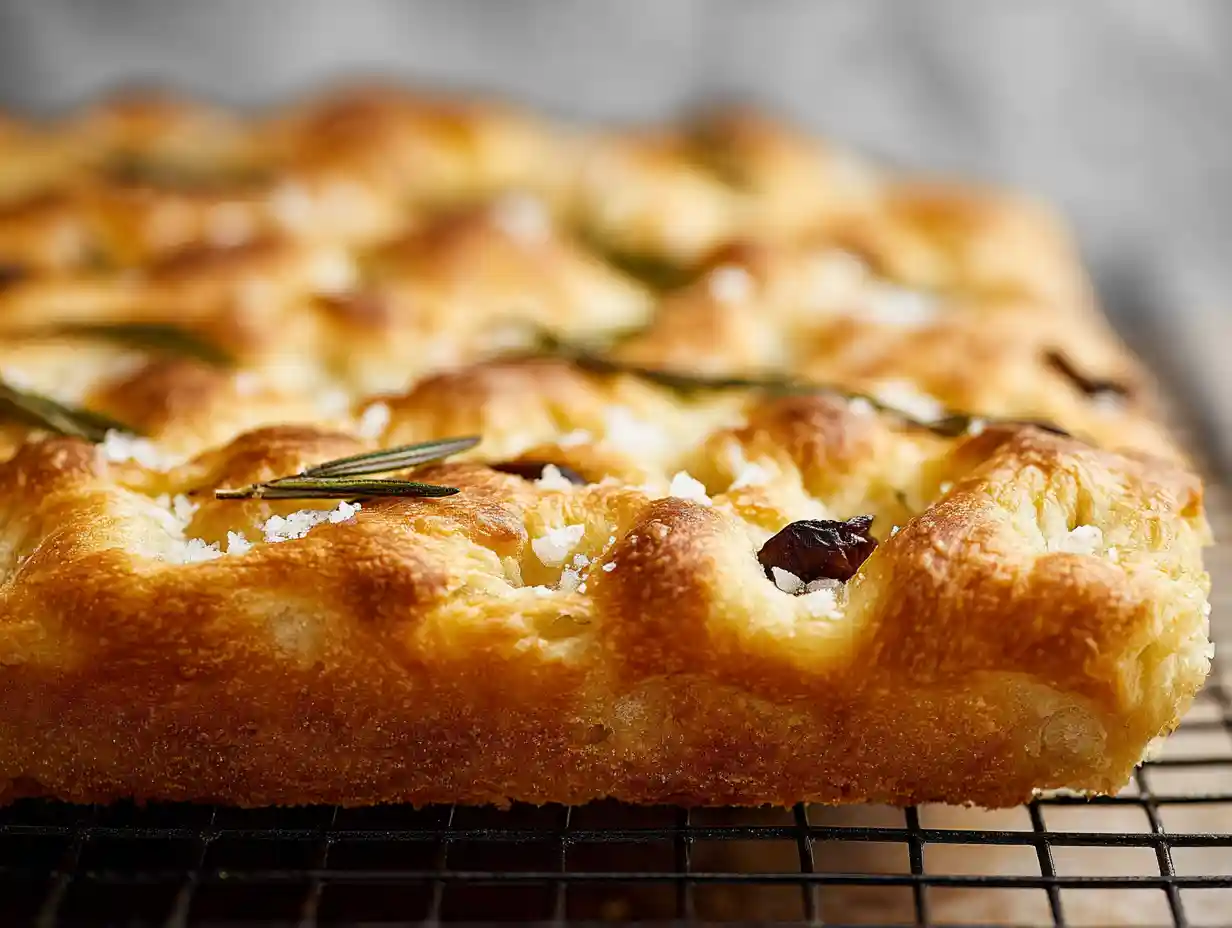

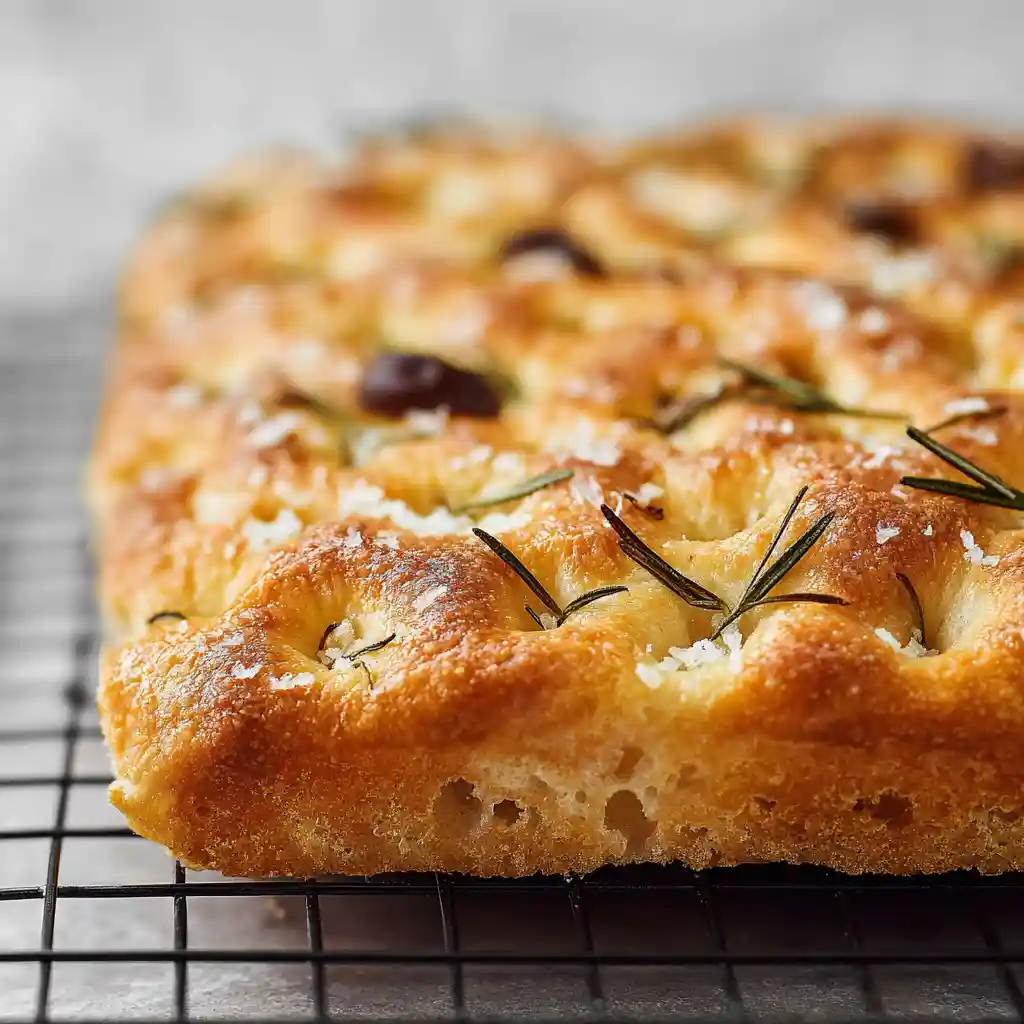
I remember the first time I pulled a golden, bubbly slab of focaccia from my oven. The whole kitchen smelled of olive oil and freshly baked bread, and I felt like a true baker. That moment is exactly why I adore this particular Sourdough Focaccia Recipe. It’s incredibly forgiving, making it a perfect first project for anyone new to sourdough, yet it produces a result that will impress even the most experienced bakers.
The process is simple, but the key is patience. The first rise, or bulk fermentation, can take anywhere from 4 to 18 hours depending on your starter and kitchen temperature. This isn’t a race; it’s about letting simple ingredients transform into something truly spectacular. Trust me, the pillowy, chewy crumb and crisp, olive-oil-fried crust are worth every minute of the wait.
Table of Contents

Foolproof Sourdough Focaccia Recipe
Ingredients
Equipment
Method
- Place the starter, salt, and water in a large bowl. Stir with a spatula to combine — it doesn’t have to be uniformly mixed. Add the flour. Mix again until the flour is completely incorporated.
- If time permits, perform one “fold”: 30 minutes after you mix the dough, reach into the bowl and pull the dough up and into the center. Turn the bowl quarter turns and continue this pulling 8 to 10 times. Maya's Tip: This single "fold" is a gentle way to build strength in the dough. It develops the gluten network without intense kneading, which is key to achieving that open, airy crumb we're looking for.
- Drizzle with a splash of olive oil and rub to coat. Cover bowl with a tea towel or bowl cover and set aside to rise at room temperature (70ºF/21ºC) for 4 to 18 hours (the time will vary depending on the time of year, the strength of your starter, and the temperature of your kitchen — in summer, for instance, my sourdoughs double in 6 hours; in winter, they double in 18 hours. Do not use an oven with the light on for the bulk fermentation — it will be too warm. It is best to rely on visual cues (doubling in volume) as opposed to time to determine when the bulk fermentation is done. A straight-sided vessel makes monitoring the bulk fermentation especially easy because it allows you to see when your dough has truly doubled.).
Maya’s Tip: Learning to trust your eyes over the clock is the most valuable skill in sourdough baking. Your dough has doubled when it looks visibly larger, puffier, and you can see bubbles under the surface. This is the sign that it’s full of air and ready for the next step. - When dough has doubled, place 2 tablespoons of olive oil into a 9×13-inch pan. (If you are using a glass pan, you may, as a precaution, want to butter it it first — I have had disasters with bread sticking when I’ve used oil alone with other baking vessels.)
- Drizzle dough with a tablespoon of olive oil. Use your hand to gently deflate the dough and release it from the sides of the bowl. Gently scoop the dough into the center of the pool of oil in your prepared pan. Fold dough envelope style from top to bottom and side to side to create a rough rectangle. Turn dough over so seam-side is down.
- Rub top of dough with oil. Leave alone for 4 to 6 hours, uncovered, or until puffy and nearly doubled.
- Heat oven to 425ºF. Rub hands lightly with oil, and using all ten fingers, press gently into the dough to dimple and stretch the dough to nearly fit the pan. Sprinkle generously with sea salt. Transfer pan to the oven and bake for about 25 minutes or until golden all around. Remove pan from oven and transfer bread to a cooling rack. Cool at least 20 minutes before slicing.
Notes
Overnight Rise Schedule
9:00 PM: Mix the dough and perform the fold. Cover and leave on the counter overnight.
8:00 AM (Next Day): Transfer the risen dough to the oiled pan for its second rise.
1:00 PM: Dimple, top, and bake the focaccia.
1:30 PM: Enjoy fresh focaccia for a late lunch or afternoon snack!
Same-Day Bake Schedule
7:00 AM: Mix the dough and perform the fold. Cover and let it rise in a warm spot.
1:00 PM (or when doubled): Transfer the dough to the oiled pan for its second rise.
6:00 PM: Dimple, top, and bake the focaccia.
6:30 PM: Serve warm focaccia with dinner. Troubleshooting:
If your focaccia is dense or gummy, it’s likely under-fermented. Make sure the dough truly doubles in size during the first rise. A weak starter can also be the cause.
If the dough didn’t rise, check if your starter is active. Also, ensure your kitchen isn’t too cold; sourdough prefers a warm spot (70-75ºF/21-24ºC).
If the bottom crust isn’t crispy, use a metal pan for better heat conduction and be generous with the olive oil in the pan. Storing and Reheating:
Store at room temperature wrapped loosely in foil or in a paper bag for up to 2 days. For longer storage, slice, wrap tightly in plastic wrap, and freeze for up to 1 month. To reheat, bake at 375°F (190°C) for 5-8 minutes until crisp and warm.
Tried this recipe?
Let us know how it was!Why This Sourdough Focaccia Recipe is the Best
After trying countless methods, I’ve landed on this one as my absolute favorite. It consistently delivers that bakery-quality result right in my own kitchen. Here’s why I think you’ll love it too:
- Unbelievably Bubbly Texture: This recipe is formulated to create a high-hydration dough, which is the secret to those big, beautiful air pockets and a light, chewy crumb.
- Rich, Complex Flavor: Using a sourdough starter doesn’t just make the bread rise; it develops a deep, tangy flavor that you simply can’t get from commercial yeast.
- Surprisingly Simple Process: Don’t let the long fermentation time fool you. The actual hands-on time is minimal. It’s mostly a game of mixing, waiting, and a little gentle folding.
- Foolproof Guidance: I’ve included all my best tips and visual cues to guide you. You’ll learn to read your dough instead of just watching the clock, which is the key to consistent success.
Understanding the “Why”: The Science of Your Ingredients
Understanding what each ingredient does can make you a more confident baker. It’s not magic, it’s just a little bit of kitchen science!
- Active Sourdough Starter: This is your natural leavening agent. It’s a living colony of wild yeast and bacteria that eats the sugars in the flour. As it eats, it releases carbon dioxide gas, which creates all those lovely bubbles in your dough and makes it rise. It’s also responsible for that classic tangy sourdough flavor.
- Bread Flour: I use bread flour because it has a higher protein content than all-purpose flour. More protein means more gluten development, which is essential for creating a strong, elastic dough that can trap all the air bubbles from the starter. This gives the focaccia its signature chewy texture.
- Kosher Salt: Salt does more than just add flavor. It also strengthens the gluten structure and helps control the fermentation process, slowing down the yeast so it doesn’t exhaust itself too quickly.
- Water: Water hydrates the flour, activating the proteins that form gluten. The amount of water (hydration) directly affects the final texture. This is a high-hydration recipe, which leads to a wonderfully open and moist crumb.
- Extra-Virgin Olive Oil: This is the heart and soul of focaccia. It adds incredible flavor, tenderizes the crumb, and helps create that signature crispy, almost-fried bottom crust. Don’t be shy with it!
Essential Equipment and Baking Pans
You don’t need a lot of fancy equipment, but the right pan makes a big difference. I use a 9×13-inch pan for this recipe, and the material it’s made from can really change the final result.
| Pan Material | Crust Effect | Crumb Effect |
|---|---|---|
| Metal (Aluminum) | Creates a very crisp, golden-brown, and evenly baked bottom crust. My top choice! | Promotes an even bake, resulting in a consistent, airy crumb. |
| Glass (Pyrex) | Can create a less crispy, sometimes softer bottom. Heats slower. | Bakes evenly, but you may need to add a few extra minutes to the bake time. |
| Cast Iron | Produces a deeply browned, ultra-crispy crust due to excellent heat retention. | Excellent for an even bake, but the focaccia may be slightly denser. |
If your pan is a different size, that’s okay! A smaller pan will give you a thicker, puffier focaccia, while a larger one will result in a thinner, crispier bread. Just keep an eye on it and adjust the baking time as needed.
The Ultimate Sourdough Focaccia Recipe
Below you’ll find all the details to make this incredible bread. The process is broken down into simple, manageable stages. Remember, the long waiting periods are when all the flavor is developing, so don’t be intimidated. Embrace the slow pace and enjoy the process!
Ingredients
- 50 g – 100 g (1/4 to 1/2 cup) active starter, see notes above
- 10 g (about 2.5 teaspoons) kosher salt
- 430 – 440 g water (1.75 cups – 1.75 cups + 2 tablespoons), room temperature, see notes above*
- 512 g (about 4 cups) bread flour, see notes above
- 3 tablespoons extra-virgin olive oil, divided, plus more for drizzling
- Nice, flaky sea salt, such as Maldon
Instructions
- Place the starter, salt, and water in a large bowl. Stir with a spatula to combine — it doesn’t have to be uniformly mixed. Add the flour. Mix again until the flour is completely incorporated.
- If time permits, perform one “fold”: 30 minutes after you mix the dough, reach into the bowl and pull the dough up and into the center. Turn the bowl quarter turns and continue this pulling 8 to 10 times.
Maya’s Tip: This single “fold” is a gentle way to build strength in the dough. It develops the gluten network without intense kneading, which is key to achieving that open, airy crumb we’re looking for. - Drizzle with a splash of olive oil and rub to coat. Cover bowl with a tea towel or bowl cover and set aside to rise at room temperature (70ºF/21ºC) for 4 to 18 hours (the time will vary depending on the time of year, the strength of your starter, and the temperature of your kitchen — in summer, for instance, my sourdoughs double in 6 hours; in winter, they double in 18 hours. Do not use an oven with the light on for the bulk fermentation — it will be too warm. It is best to rely on visual cues (doubling in volume) as opposed to time to determine when the bulk fermentation is done. A straight-sided vessel makes monitoring the bulk fermentation especially easy because it allows you to see when your dough has truly doubled.).
Maya’s Tip: Learning to trust your eyes over the clock is the most valuable skill in sourdough baking. Your dough has doubled when it looks visibly larger, puffier, and you can see bubbles under the surface. This is the sign that it’s full of air and ready for the next step. - When dough has doubled, place 2 tablespoons of olive oil into a 9×13-inch pan. (I have been using this USA Pan, which I love. I have had no sticking issues. If you are using a glass pan, you may, as a precaution, want to butter it it first — I have had disasters with bread sticking when I’ve used oil alone with other baking vessels.)
- Drizzle dough with a tablespoon of olive oil. Use your hand to gently deflate the dough and release it from the sides of the bowl. Gently scoop the dough into the center of the pool of oil in your prepared pan. Fold dough envelope style from top to bottom and side to side to create a rough rectangle. Turn dough over so seam-side is down.
- Rub top of dough with oil. Leave alone for 4 to 6 hours, uncovered, or until puffy and nearly doubled.
- Heat oven to 425ºF. Rub hands lightly with oil, and using all ten fingers, press gently into the dough to dimple and stretch the dough to nearly fit the pan. Sprinkle generously with sea salt. Transfer pan to the oven and bake for about 25 minutes or until golden all around. Remove pan from oven and transfer bread to a cooling rack. Cool at least 20 minutes before slicing.
Sample Baking Schedules for this Sourdough Focaccia Recipe
Planning is everything with sourdough. Here are two sample schedules to help you fit this bake into your day.
Overnight Rise Schedule
- 9:00 PM: Mix the dough and perform the fold. Cover and leave on the counter overnight.
- 8:00 AM (Next Day): Transfer the risen dough to the oiled pan for its second rise.
- 1:00 PM: Dimple, top, and bake the focaccia.
- 1:30 PM: Enjoy fresh focaccia for a late lunch or afternoon snack!
Same-Day Bake Schedule
- 7:00 AM: Mix the dough and perform the fold. Cover and let it rise in a warm spot.
- 1:00 PM (or when doubled): Transfer the dough to the oiled pan for its second rise.
- 6:00 PM: Dimple, top, and bake the focaccia.
- 6:30 PM: Serve warm focaccia with dinner, as it pairs beautifully with dishes like a hearty Gordon Ramsay meatloaf recipe.
Topping & Flavor Variations
This is where you can get really creative! The simple, salty top is classic, but with the right toppings, this focaccia becomes a perfect appetizer to serve alongside other favorites like classic Southern deviled eggs. Here are a few of my other favorites.
| Topping Idea | Preparation | Best Time to Add |
|---|---|---|
| Rosemary & Sea Salt | Drizzle with oil, sprinkle fresh rosemary leaves and flaky sea salt. | Before Baking |
| Cherry Tomato & Garlic | Halve cherry tomatoes and thinly slice garlic. Toss in olive oil. | Before Baking |
| Pesto Swirl | Dollop pesto over the dough and gently swirl with a spoon. | Before Baking |
| Caramelized Onion & Olive | Sauté sliced onions until deeply caramelized. Scatter over dough with pitted olives. | Before Baking |
| Parmesan & Black Pepper | Grate fresh Parmesan cheese over the top and add a generous crack of black pepper. | Last 5 mins of baking |
Troubleshooting Your Sourdough Focaccia
Sometimes bakes don’t go exactly as planned. Don’t worry! Here are some common issues and how to fix them.
Why is my focaccia dense or gummy? This is usually a sign of under-fermentation. Your dough probably needed more time for the first rise (the bulk fermentation). Next time, make sure it has truly doubled in size and looks airy and bubbly before moving it to the pan. A weak or sluggish starter can also be the culprit.
Why didn’t my dough rise? The most common reason is an inactive starter. Make sure your starter is bubbly, active, and has recently been fed before you use it. Another reason could be that your kitchen is too cold. Sourdough loves warmth, so try to find a cozy spot for it to rise, around 70-75ºF (21-24ºC).
Why is the bottom crust not crispy? This often comes down to the pan and the amount of oil. A metal pan conducts heat better than glass, leading to a crispier crust. Also, be generous with the olive oil in the bottom of the pan; it essentially fries the dough, creating that delicious texture.
How do I get a more sour flavor? A tangier flavor develops with longer, slower fermentation. You can achieve this by using a slightly smaller amount of starter or by letting your dough ferment in a cooler spot (like the refrigerator for part of its rise), which slows things down and gives the bacteria more time to produce those tangy acetic acids.
Storing and Reheating Instructions
If you have any leftovers (which is rare in my house!), here’s how to keep them fresh.
- Room Temperature: Wrap the focaccia loosely in foil or place it in a paper bag. It will stay fresh for up to 2 days. Avoid plastic wrap, as it can make the crust soggy.
- Refrigerator: I don’t recommend storing it in the fridge, as it tends to make the bread stale faster.
- Freezer: This is the best option for long-term storage. Slice the focaccia into individual portions, wrap each piece tightly in plastic wrap, and then place them in a freezer-safe bag. It will keep for up to 1 month.
To reheat, preheat your oven to 375°F (190°C). Place the focaccia directly on the oven rack and bake for 5-8 minutes, or until the crust is crisp and the center is warm and soft again.
Don’t Waste It! Using Sourdough Discard
If you’re maintaining a sourdough starter, you’ll have “discard” to use up. Don’t throw it away! It’s packed with flavor and is perfect for making things like crispy, savory Sourdough Discard Crackers, which would be a fantastic addition to an affordable charcuterie board. Just mix the discard with a little olive oil, salt, and herbs, spread it thinly on a baking sheet, and bake until golden.
FAQs about Sourdough Focaccia
Can I use all-purpose flour instead of bread flour?
You can, but the texture will be slightly different. All-purpose flour has less protein, so the resulting crumb might be a bit softer and less chewy. It will still be delicious!
How do I know my sourdough starter is active and ready?
An active starter will have doubled in volume a few hours after feeding, be full of bubbles, and smell pleasantly tangy. A great test is the “float test”: drop a small spoonful of starter into a glass of water. If it floats, it’s ready to use.
Can I make this Sourdough Focaccia Recipe in a different-sized pan?
Absolutely. A smaller 8×8 or 9×9 inch pan will give you a very thick, pillowy focaccia. A larger sheet pan will create a thinner, crispier version, almost like a flatbread. You may need to adjust the final baking time.
Conclusion
There is something so deeply satisfying about making your own bread from scratch, and this Sourdough Focaccia Recipe is one of the most rewarding bakes I know. It’s rustic, flavorful, and incredibly versatile. I truly hope you give it a try and fall in love with it just as I have.
I’d love to see your creations! Please leave a comment below with any questions you have, share how your focaccia turned out, or let me know what delicious toppings you decided to use. Happy baking